2026 Humanoid Robot Market Status & Outlook: Lithium Battery Pack Core Specifications
The humanoid robot industry has officially transitioned from the technology verification phase to large-scale commercialization, with 2026 widely recognized as the "year of mass delivery" in the sector. As the "energy heart" of humanoid robots, lithium battery packs directly determine the robots’ runtime, dynamic performance, and operational stability. Core parameters such as voltage platform, continuous/peak discharge current, and energy density are the key technical focus of the industry. This article first sorts out the current status and development trends of the humanoid robot market, then focuses on the core technical requirements of lithium battery packs for robot power systems, and finally briefly outlines basic safety standards.
1. Current Status and Development Outlook of the Humanoid Robot Market
1.1 Explosive Growth in Market Scale
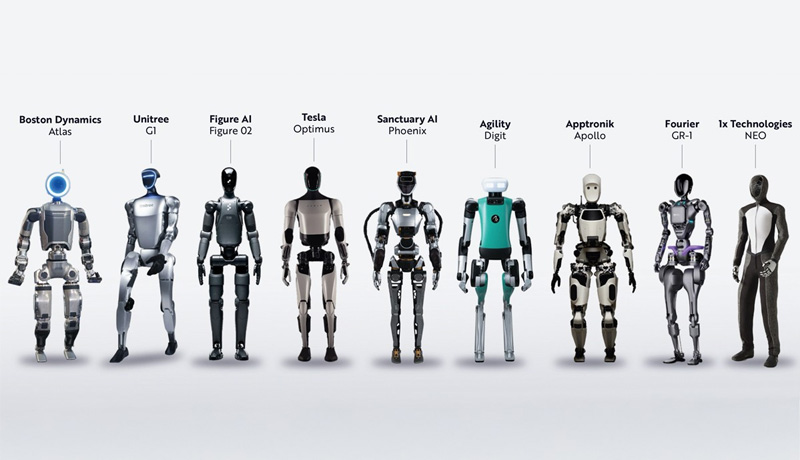
Global shipments of humanoid robots reached 13,000 units in 2025, with Chinese manufacturers dominating the market—leading enterprises such as Agibot and Unitree Robotics account for 71% of the total market share. The industry will achieve a step-by-step leap in 2026, with domestic shipments expected to exceed 62,500 units. Leading companies are targeting a production capacity of 10,000 units; for example, UBTECH Robotics plans to ramp up the production capacity of its Walker S2 humanoid robot to 20,000 units by the end of 2026, while Tesla aims to produce 50,000 Optimus units in the same year.
1.2 Diversified Application Scenarios Drive Demand
Humanoid robots are no longer confined to laboratory demonstrations but are penetrating three core application scenarios at an accelerated pace:
- Industrial Inspection & Logistics: Robots replace human workers in high-risk environments such as automotive assembly lines, chemical plants, and warehousing centers, performing tasks like equipment inspection, material handling, and order sorting.
- Commercial Services: In hotels, shopping malls, and restaurants, humanoid robots provide services such as customer reception, food delivery, and cleaning, improving operational efficiency and reducing labor costs.
- Home & Elderly Care: Targeting the global aging population, care robots assist with daily tasks like patient transfer, medication reminders, and companionship, addressing the shortage of caregiving resources.
By 2030, the global humanoid robot market size is projected to exceed $77 billion, with a compound annual growth rate (CAGR) of 94% from 2025 to 2030.
1.3 Technological Breakthroughs Reduce Costs and Boost Popularization
The localization rate of core components (harmonic reducers, servo motors, lithium battery packs) has exceeded 70% in China, reducing the bill of materials (BOM) cost of humanoid robots to one-third of that of overseas supply chains. For example, the cost of Tesla’s Optimus has dropped from $200,000 per unit to less than $50,000, laying the foundation for large-scale application in industrial and commercial scenarios.
2. Lithium Battery Packs: Core of Humanoid Robot Power Systems
Humanoid robots perform complex dynamic movements (walking, jumping, grasping heavy objects), which impose stringent requirements on their power systems. Lithium battery packs, as the primary energy source, must balance high power output, lightweight design, and long cycle life. Below are the core technical specifications that determine battery performance:
Key Technical Specifications of Lithium Battery Packs for Humanoid Robots
| Specification Category |
Technical Requirements |
Application Scenario Explanation |
| Voltage Platform |
48V–58V (mainstream); 24V for small service robots |
Tesla Optimus adopts a 52V system; UBTECH Walker S2 uses dual 48V battery packs for 24/7 operation. This voltage range balances power output and safety, avoiding high-voltage risks in human-robot interaction scenarios. |
| Discharge Current |
Continuous discharge: 10C–30C; Peak discharge: 50C |
Peak discharge current of 50C supports sudden movements (e.g., lifting 20kg objects); continuous discharge of 10C–30C ensures stable operation during long-time walking or working. |
| Energy Density |
250Wh/kg–350Wh/kg |
High energy density reduces battery weight, critical for bipedal robot balance. A 10kg battery pack with 320Wh/kg density provides 3.2kWh of energy, supporting 8 hours of continuous operation for industrial robots. |
| Cycle Life |
≥2000 charge-discharge cycles (retaining ≥80% capacity) |
Industrial robots require long-term continuous operation; 2000+ cycles meet the 3–5 year service life demand of commercial robots. |
| Form Factor |
Modular design, customizable dimensions |
Batteries are integrated into robot legs or torso to save space; modular design enables quick replacement for 24/7 industrial shifts. |
2.1 Voltage Platform: Balancing Power and Safety
The mainstream voltage for humanoid robots ranges from 48V to 58V. Low-voltage systems (below 48V) cannot meet the power demand for dynamic movements, while high-voltage systems (above 60V) pose electrical safety risks in human-robot collaboration scenarios. Small service robots (e.g., hotel reception robots) often adopt 24V systems to prioritize lightweight design and low power consumption.
2.2 Discharge Current: Supporting Dynamic Movements
Discharge current is the most critical parameter for humanoid robot batteries. The "C-rate" represents the ratio of discharge current to battery capacity: a 10C discharge rate means a 10Ah battery can output 100A of current.
- Continuous Discharge (10C–30C): Ensures stable power supply for basic movements such as walking, turning, and carrying light loads. For example, a 15Ah battery with a 20C continuous discharge rate can output 300A of current for extended periods.
- Peak Discharge (50C): Meets the power demand for sudden, high-load movements (e.g., jumping over obstacles, lifting heavy objects). Peak current lasts for a short time (usually within 10 seconds) and requires the battery to have excellent thermal stability.
2.3 Energy Density & Form Factor: Lightweight and Space-Saving
Humanoid robots have strict weight limits—excessive battery weight will affect bipedal balance and movement flexibility. The mainstream energy density of lithium battery packs is 250–350Wh/kg, achieved through high-performance 21700 or 4680 lithium-ion cells. In terms of form factor, battery packs are designed to fit into robot legs or torso, with modular structures that allow quick replacement to ensure uninterrupted operation.
2.4 Basic Safety Requirements (Brief Overview)
Safety is a prerequisite for battery application, especially for robots operating near humans. The following basic safety measures are essential:
- Battery Management System (BMS): Monitors voltage, temperature, and current in real time to prevent overcharging, over-discharging, and short circuits.
- Thermal Management: Graphene heat sinks or liquid cooling systems maintain battery temperature within 25°C–40°C, preventing thermal runaway during high-load discharge.
- Compliance with Standards: Meet global safety certifications such as UN38.3 (transport safety), UL 2054 (lithium battery safety), and GB/T 37394-2019 (robot battery safety standard).
3. ShunTongDa: Customized Lithium Battery Solutions for Humanoid Robots
As a professional manufacturer of custom lithium battery packs, ShunTongDa has deep expertise in the humanoid robot power system sector. We provide tailored battery solutions that meet the core technical requirements of robots:
- Customized Voltage & Discharge Rate: Design 48V–58V battery packs with 10C–30C continuous discharge and 50C peak discharge, matching the dynamic performance needs of different robots.
- High Energy Density & Lightweight Design: Use Grade-A LG/Panasonic 21700 cells to achieve 300Wh/kg+ energy density, optimizing battery weight for robot balance.
- Modular & Space-Saving Design: Customize battery dimensions according to robot chassis structure, enabling seamless integration into legs or torso.
- Basic Safety Protection: Equip batteries with 8-layer BMS protection and thermal management systems, complying with global safety standards to ensure user safety.
ShunTongDa’s battery solutions support rapid prototyping (samples delivered in 7–10 days) and mass production (2–4 weeks lead time), meeting the tight launch schedules of robot manufacturers.
Contact ShunTongDa for Custom Humanoid Robot Battery Solutions
With the continuous expansion of the humanoid robot market, high-performance lithium battery packs will become a key differentiator for robot products. ShunTongDa is committed to providing reliable, customized power solutions to help robot manufacturers accelerate product commercialization and seize market opportunities.