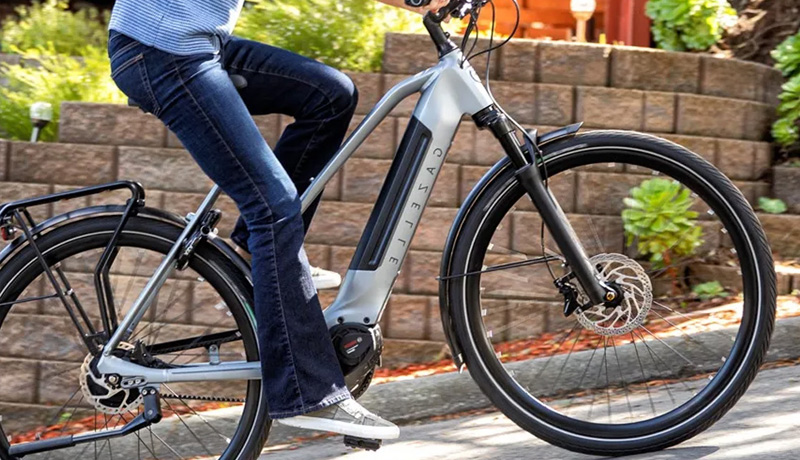
What Is a Hailong Battery?
This is where most confusion starts. "Hailong" is not a single brand. It refers to a specific style of downtube battery casing originally developed by a Chinese manufacturer. The name translates roughly to "sea dragon," and it has become the industry shorthand for this popular form factor — much like "Silver Fish" or "Shark" describe other common case shapes.
Hailong-style cases are produced by dozens of factories. Some use premium cells and rigorous quality control. Others cut every possible corner. The result is a market where two batteries that look identical on the outside can perform completely differently — one delivering 800+ cycles of reliable power, the other failing within months.
Understanding this distinction is the single most important thing to know before you buy.
Hailong Battery Models and Sizes
Not all Hailong batteries are the same size. The casing has evolved through several generations, and each model accommodates different cell counts and form factors.
Main Hailong Case Series
| Model |
Cell Type |
Max Cell Count |
Typical Dimensions (L × W × H) |
| Hailong No.1 |
18650 |
52 cells |
365 × 90 × 90 mm |
| Hailong No.1 Type 2 |
18650 |
65 cells |
368 × 110 × 90 mm |
| Hailong No.2 |
18650 / 21700 |
52 cells (18650) |
365 × 90 × 135 mm |
| Hailong No.3 |
18650 |
52 cells |
365 × 90 × 90 mm |
| Hailong G56 |
18650 |
56 cells |
~368 × 110 × 90 mm |
| Hailong G70 |
21700 |
70 cells |
~415 × 145 × 110 mm |
| Hailong G80 |
21700 |
80 cells |
~403 × 98 × 158 mm |
The G70 and G80 models using 21700 cells represent the newer generation, offering higher energy density in a larger but still manageable form factor. A G80 case loaded with 80 pieces of 21700 cells can achieve capacities of 30Ah or more at 48V — something physically impossible in the older No.1 design.
Key Compatibility Check
Before ordering, measure the mounting space on your bike frame. Check the distance between bolt holes and the clearance around the battery when it is seated. Hailong No.1 and No.2 bases are not interchangeable — the locking mechanism and rail spacing differ.
Are Hailong Batteries Safe?
The Fire Hazard Discussion
You may have seen YouTube videos or forum posts warning about Hailong battery fires. These concerns are not unfounded — poorly constructed packs using generic cells and substandard assembly can and do fail.
A commonly cited failure mode involves spot-welded nickel strips that are too thin or poorly attached, creating high-resistance points that overheat under load. Combined with a cheap BMS that lacks thermal protection, the result can be catastrophic.
However, a well-made Hailong pack from a reputable manufacturer is no more dangerous than any other quality lithium battery. The case itself is made of durable ABS or aluminum alloy designed to withstand vibration and impact from rough terrain.
What a Safe Hailong Battery Should Include
- Brand-name cells (Samsung, LG, Panasonic, or at minimum a reputable Chinese A-grade supplier)
- Smart BMS with overcharge, over-discharge, short-circuit, and temperature protection
- Pure nickel strip welding (not nickel-plated steel) with adequate thickness for the rated current
- UL, CE, or UN38.3 certifications — these indicate the pack has passed standardized safety testing
- Proper cell matching — all cells in the pack should have closely matched internal resistance and capacity
If a seller cannot or will not tell you what cells are inside the pack and what BMS it uses, walk away.
How to Choose a Quality Hailong Battery
1. Match Voltage to Your Motor
The most basic rule: the battery voltage must match your controller and motor. Common configurations include:
- 36V — entry-level commuter ebikes, 250W motors
- 48V — the most common standard, suitable for 500W–1000W motors
- 52V — high-performance option, compatible with many 48V systems for extra top speed
Never pair a 48V battery with a 36V controller, or vice versa.
2. Choose Capacity Based on Your Range Needs
Capacity (Ah) directly affects how far you can ride. As a rough rule of thumb, a 48V 13Ah pack (~624Wh) delivers approximately 40–60 km of range under typical mixed riding conditions. A 48V 20Ah pack extends that to 70–100 km.
| Voltage |
Capacity |
Estimated Range |
| 36V |
10Ah |
25–35 km |
| 36V |
17.5Ah |
40–55 km |
| 48V |
13Ah |
40–60 km |
| 48V |
17.5Ah |
60–85 km |
| 48V |
20Ah |
70–100 km |
| 52V |
20Ah |
75–105 km |
Range estimates assume moderate pedal assist, flat to rolling terrain, and a 70 kg rider. Actual results vary with wind, hills, tire pressure, and riding style.
3. Verify Cell Type and Brand
This is where quality lives or dies. Premium packs use Samsung 35E, LG MJ1, or Panasonic NCR18650GA cells — these offer 500–1000 charge cycles at 80% depth of discharge. Budget packs often use unbranded cells with wildly optimistic ratings and real cycle life under 200.
Ask the seller: "What exact cells are inside this pack?" If the answer is vague ("A-grade lithium cells"), do not buy.
4. Check the BMS Specifications
A good Battery Management System should specify:
- Continuous discharge current (e.g., 30A)
- Peak discharge current (e.g., 50A)
- Overcharge protection voltage per cell (typically 4.25V for Li-ion)
- Temperature cutoff thresholds
The BMS rating should exceed your controller's maximum current draw by at least 20% for a safety margin.
5. Look for the 4-Pin vs 5-Pin Connector
Hailong batteries commonly use 4-pin or 5-pin blade connectors. A 5-pin connector typically adds enhanced safety or communication features. Know which connector your bike uses before ordering — they are not cross-compatible without rewiring.
What Riders Say: Community Feedback
Across Reddit, Electric Bike Review forums, and Facebook groups, the consensus is remarkably consistent:
- Riders who bought from known brands with transparent specs are overwhelmingly satisfied, reporting 2–3 years of reliable use
- Riders who bought the cheapest option on AliExpress or eBay often report rapid capacity loss, BMS failures, or in the worst cases, dangerous incidents
- The price difference between a quality pack and a mystery pack is typically $100–200 — a small premium considering what is at stake
One Reddit user summarized it well: "The Hailong case is fine. It is what is inside that matters."
Common Problems and How to Avoid Them
Sudden Capacity Drop
A pack that shows full charge but dies under load within minutes typically has one or more failed cells. This is most common in packs using unmatched or low-grade cells. The fix is cell replacement — or more realistically, buying a quality replacement pack.
Battery Not Recognized by Controller
This usually comes down to communication protocol mismatches, especially with proprietary ebike systems (Bosch, Shimano, Brose). Hailong packs are designed for generic/open-system bikes. Check controller compatibility before purchasing.
Loose or Wobbly Mount
Over time, the mounting rails can wear. Periodically check and tighten the base plate bolts. Some riders add a velcro strap as secondary security for rough off-road riding.
Is a Hailong Battery Right for You?
A Hailong battery is an excellent choice if:
- You ride a DIY or conversion ebike with a standard controller
- You need a removable downtube battery for charging indoors
- You want a widely available form factor with upgrade options
- You are willing to do your homework on the manufacturer
It may not be the right choice if:
- You have a proprietary ebike system that requires a specific OEM battery
- You are looking for the absolute cheapest option (safety and longevity should not be compromised for $50 savings)
- Your bike has an unusual frame shape that does not accommodate the standard Hailong mounting footprint
The Bottom Line
"Are Hailong batteries any good?" is not a yes-or-no question. The Hailong case design is proven, durable, and widely adopted for good reason. What determines whether a specific pack is worth your money — and safe to use — is what is inside: the cells, the BMS, and the quality of assembly.
Spend the time to verify what you are buying. Demand transparency from sellers. A well-built Hailong pack with Samsung or LG cells and a quality BMS will serve you reliably for years. A mystery pack from an anonymous factory is a gamble you should not take.
Looking for reliable lithium ebike batteries with transparent specifications? Visit ShunTongDa Battery to explore our range of ebike battery solutions, including Hailong-style packs built with brand-name cells and smart BMS protection. For bulk inquiries and OEM partnerships, contact our team at jdpower@stdbattery.com.