Which Battery is Best for an Electric Motorcycle?
So, you've caught the electric motorcycle bug – the instant torque, the silent ride, the environmental benefits, and the sheer fun factor. But as you dive deeper into the world of e-motos, one crucial question inevitably arises: Which battery is best for an electric motorcycle? The answer isn't just a simple label; it's about understanding your riding needs, the motorcycle's capabilities, and how different battery technologies stack up.
The Clear Winner: Lithium-Ion Batteries
When it comes to powering electric motorcycles, lithium-ion (Li-ion) batteries are, by far, the best choice. They have revolutionized the electric vehicle (EV) industry, and for good reason. Let's break down why Li-ion batteries are the preferred power source for most modern electric motorcycles:
Key Advantages of Lithium-Ion Batteries for Electric Motorcycles:
- Higher Energy Density: Li-ion batteries pack a lot of energy into a relatively small and lightweight package. This is crucial for motorcycles where weight and space are at a premium. A lighter battery means better handling, acceleration, and overall performance.
- Lightweight: Compared to traditional lead-acid batteries (which were once common in some electric scooters and early e-bikes), lithium-ion batteries are significantly lighter. This reduction in unsprung weight (weight not supported by the suspension) can drastically improve the motorcycle's dynamics.
- Longer Cycle Life: Li-ion batteries can typically endure hundreds, if not thousands, of charge-discharge cycles before their capacity degrades significantly. While the exact number varies based on factors like depth of discharge (DoD) and charging practices, they outperform lead-acid batteries by a wide margin in this regard.
- Lower Self-Discharge Rate: When not in use, lithium-ion batteries lose their charge much more slowly than other battery types. This means your e-motorcycle will hold its charge better during periods of inactivity.
- No Memory Effect: Unlike some older battery technologies (like nickel-cadmium), Li-ion batteries don't suffer from the "memory effect," where they might lose capacity if not fully discharged before recharging.
- High Discharge Rates (C-Rating): Many Li-ion batteries, especially those designed for high-performance applications, can deliver high currents (measured in C-rating) which is essential for powering the electric motor, especially during acceleration or climbing steep hills.
Beyond the Basics: Powering High-Performance and Off-Road Electric Motorcycles
While lithium-ion is the clear front-runner, not all Li-ion batteries are created equal. This is particularly true when considering high-performance electric motorcycles or those designed for off-road use, where power demands can be extreme.
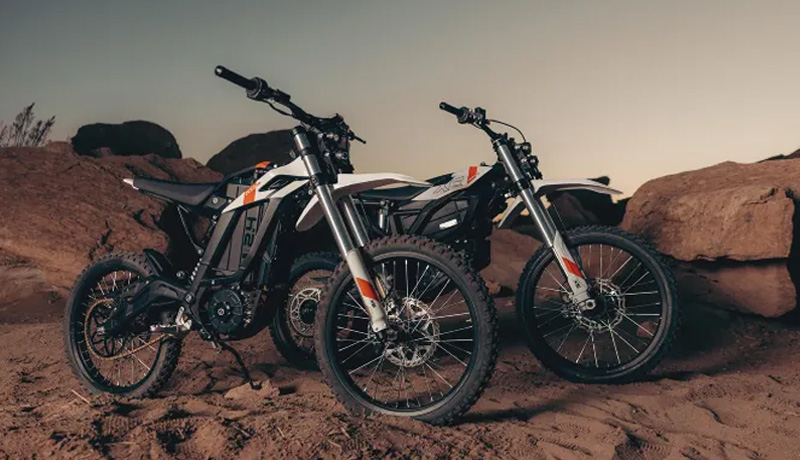
Off-road electric motorcycles, like the popular SURRON LIGHT BEE X, are engineered for demanding terrain, jumps, and sustained high power output. The SURRON LIGHT BEE X, for instance, boasts a peak motor output of up to 6000W. To harness this level of performance, the battery must be capable of delivering the necessary current without significant voltage sag or overheating.
Motor Power and Battery Selection: A Critical Relationship
The motor's power rating (in watts or kilowatts) is a primary factor in determining the appropriate battery. A higher power motor will draw more current from the battery, especially under load. Therefore, when choosing a battery for your electric motorcycle, you must consider:
- Battery Voltage (V): The motor is designed to operate at a specific voltage. The battery pack's nominal voltage must match or be compatible with the motor controller's requirements. Common voltages for electric motorcycles range from 48V up to 96V or higher for high-performance models.
- Battery Capacity (Ah): Capacity, measured in Ampere-hours (Ah), determines how much energy the battery can store. A higher Ah rating generally means longer range, assuming the same power consumption. However, capacity alone isn't the whole story; it's closely linked to the battery's discharge rate capability.
- Battery Discharge Rate (C-Rating): This is perhaps the most critical specification for high-performance electric motorcycles. The C-rating indicates how much current the battery can safely deliver relative to its capacity. For example, a 10Ah battery with a 10C discharge rating can deliver 100A (10Ah x 10C).
For a 6000W motor operating at 60V, the current draw would be approximately 100A (Power (W) = Voltage (V) x Current (A)). Therefore, the battery pack must be capable of supplying this 100A continuously (and often more for peak demands) without exceeding its safe operating parameters. This means using cells with high C-ratings, such as 18650 or 21700 cells specifically designed for high discharge applications. These cells are often found in high-performance electric vehicles and power tools.
Compared to electric bicycles, which typically have lower power motors (250W to 750W in many regions), electric motorcycles, especially off-road ones, require batteries with significantly higher discharge rates. Even if an e-bike battery has the same voltage and capacity as an e-motorcycle battery, it might not have the C-rating to deliver the necessary current for the more powerful motor, leading to premature failure or poor performance.
Capacity Considerations for Real-World Riding
While high discharge rate is essential for performance, capacity (Ah) dictates range. However, the actual range you'll get depends on several factors:
- Riding Style: Aggressive acceleration, high speeds, and constant throttle application (common in off-roading or spirited street riding) will drain the battery much faster than gentle cruising.
- Terrain: Climbing steep hills or riding through soft terrain (like sand or mud) increases the motor's load and thus battery consumption.
- Weight: The combined weight of the rider, motorcycle, and any cargo affects energy usage.
- Battery Age and Temperature: As Li-ion batteries age (after several hundred charge cycles), their maximum capacity decreases. Cold temperatures also temporarily reduce battery performance and available capacity.
For example, a SURRON LIGHT BEE X with a 60V 30Ah battery (1800Wh) might offer a range of 40-80 kilometers or more, depending on riding conditions. However, pushing the motor to its 6000W limits frequently will significantly reduce that range.
Battery Lifespan Expectations for Electric Motorcycles
It's important to manage expectations regarding the lifespan of lithium-ion batteries in electric motorcycles, especially high-performance ones. The demanding conditions (high discharge rates, temperature fluctuations, vibration) can accelerate wear.
Typically, a lithium-ion battery pack in an electric motorcycle might last for 500 to 1000 full charge-discharge cycles before its capacity drops to around 80% of its original rating (this is often considered the end of useful life for many applications). However, for high-performance off-road motorcycles that are subjected to frequent high-current discharges and potentially less-than-ideal charging practices, the lifespan might be on the lower end of that spectrum, perhaps around 500 cycles or even less before significant degradation is noticed. After that, the range and performance will gradually diminish.
Factors that influence battery lifespan include:
- Depth of Discharge (DoD): Regularly discharging the battery to very low levels (e.g., below 20%) can reduce its lifespan. It's better to recharge before it gets too low when possible.
- Charging Speed and Method: Using high-speed chargers can generate more heat, which can stress the battery. Following the manufacturer's charging recommendations is crucial.
- Temperature: Exposing the battery to extreme heat or cold, especially during charging or discharge, is harmful. Storing the battery in a cool, dry place when not in use is ideal.
- Vibration and Physical Damage: Off-road riding is inherently rough. A robust battery casing and secure mounting are essential to prevent damage to the cells and connections.
Conclusion: Choosing the Right Battery for Your Electric Motorcycle
In conclusion, lithium-ion batteries are the undisputed choice for electric motorcycles due to their high energy density, lightweight, and excellent performance characteristics. When selecting a battery, or when evaluating an electric motorcycle's battery pack, pay close attention to:
- Compatibility with the Motor: Ensure the voltage matches the motor controller's requirements.
- Discharge Rate (C-Rating): This is paramount for high-performance and off-road bikes. It must be able to supply the motor's current demands without issue.
- Capacity (Ah): Balanced with your typical riding range needs and the battery's weight.
- Quality and Construction: Reputable brands using high-quality cells and robust BMS (Battery Management System) are essential for safety and longevity.
Understanding these factors will help you make an informed decision and ensure you get the most out of your electric motorcycle, whether you're commuting through the city or tackling challenging off-road trails like a pro on your SURRON LIGHT BEE X. Remember, the battery is the heart of your e-motorcycle – choose wisely!
Share Your Thoughts
What has your experience been with electric motorcycle batteries? Do you have a preferred type or brand? Contact us right away!!