E-Bike Battery Fires: The 3 Critical Mistakes You MUST Avoid When Charging
The explosion in e-mobility has brought unprecedented convenience, yet it has also cast a spotlight on the inherent risks associated with high-energy-density lithium-ion batteries—namely, the risk of fire. As industry professionals, we assert that the vast majority of e-bike battery fire incidents are not due to flawed chemistry, but rather to critical user errors and manufacturing shortcomings. Understanding the risks is the first step toward prevention. We break down the three most dangerous mistakes riders make and offer vital safety solutions.
The Core Danger: Understanding Thermal Runaway
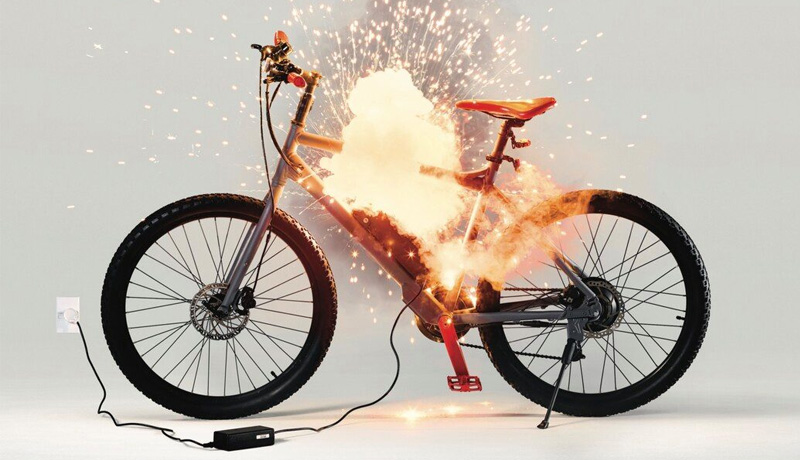
Before examining the mistakes, it is vital to understand the mechanism behind battery fires: thermal runaway. This is a chain reaction where excessive internal heat (caused by overcharging, internal short-circuits, or external damage) causes the cell temperature to rise rapidly. Once the temperature reaches a critical point, the cell releases flammable gases and heat, causing adjacent cells to fail, leading to an uncontrollable fire and possible explosion. The process is fast, violent, and often starts silently.
Part I: The 3 Critical Mistakes That Lead to Failure
Mistake #1: Using Unmatched or Uncertified Third-Party Chargers
This is arguably the most common and dangerous charging mistake. A charger is not a universal device; it is engineered to deliver a precise voltage and current profile specifically matched to the battery's cell configuration and chemistry. Using a charger that is:
- Mismatched in Voltage (e.g., using a 52V charger on a 48V battery): This guarantees overcharging the cells, which destroys the internal separation layers and initiates thermal runaway.
- Uncertified and Poorly Made: Cheap, unbranded chargers often lack crucial safety features like automatic cutoff, overcurrent protection, and proper fusing. Their inconsistent current delivery can cause uneven cell wear and dangerous heat buildup.
The Safety Protocol: Always use the original equipment manufacturer (OEM) charger, or a certified, high-quality replacement explicitly approved by the battery vendor (like ShunTongDa Battery). Never trust generic chargers.
Mistake #2: Charging Unattended, Overnight, or in Flammable Environments
Convenience should never override caution. A battery failure often occurs at the point of maximum stress—during charging. Leaving a battery charging overnight or while you are away from home removes the chance for immediate intervention. Furthermore, the charging location is critical:
- Avoid High-Risk Areas: Do not charge in hallways, near exit routes, inside bedrooms, or close to flammable materials like curtains, paper, or solvents.
- Optimal Charging Surface: Always charge on a non-combustible surface, such as concrete, tile, or inside a specialized fire-retardant battery bag (lipo safe bag).
The Safety Protocol: Charge when you are awake and alert. Place a working smoke detector nearby. If a fire starts, immediate attention is crucial, as water alone is often ineffective against thermal runaway.
Mistake #3: Ignoring Physical Damage, Swelling, or Strange Odors
Physical trauma—dropping the battery, being involved in a crash, or water ingress—can cause internal micro-shorts that may not manifest as a problem for days or weeks. When the internal short occurs, the current bypasses the normal circuit, causing localized heat and triggering thermal runaway. If you observe any of the following signs, stop charging and using the battery immediately:
- Swelling or Bulging: A definitive sign of off-gassing and internal pressure buildup (a pre-fire state).
- Heat or Discoloration: Excessive heat without charging, or noticeable discoloration on the casing.
- Odor: A sweet, acrid, or chemical odor, indicating cell rupture.
The Safety Protocol: If a battery is damaged, isolate it immediately. Move it outdoors, away from structures, and place it in a metal container filled with sand. Do not attempt to charge or use a compromised battery.
Part II: Going Beyond Mistakes - The Role of Certification
The Non-Negotiable Standard: UL Certification
Many social media discussions emphasize UL Certification (Underwriters Laboratories). This is not just a sticker; it means the battery pack and charger have undergone rigorous, non-biased testing for safety against short-circuiting, overcharging, drops, and temperature extremes. When purchasing, look for batteries certified to standards like UL 2271 (for Light Electric Vehicle batteries) or UL 2849 (for the entire e-bike electrical system). Certification is the manufacturer’s promise of safety and structural integrity.
The Brain of the Operation: The BMS
A high-quality Battery Management System (BMS) is your last line of defense. It continuously monitors the voltage, temperature, and current of every cell group. A superior BMS should automatically cut power if it detects over-voltage (preventing overcharging), under-voltage (preventing deep discharge), or dangerously high temperatures. This internal intelligence is what separates a safe, professional battery from a cheap, dangerous imitation.
Emergency Action: What to Do If a Fire Starts
If you witness a battery entering thermal runaway (hissing, smoking, venting fire), do not try to move it unless you can do so safely and quickly. If indoors, evacuate the area immediately and call emergency services. Lithium-ion fires require specialized extinguishing agents (Class D or copper powder), though copious amounts of water may slow the spread. Your priority is always life safety, followed by property protection.
Prioritize Safety, Not Just Power.
The risks of an e-bike battery fire are real, but they are dramatically reduced when you combine meticulous user habits with high-quality, certified hardware. Safety is not a luxury; it is the foundation of reliable e-mobility.
Need a Certified, Professionally Engineered Battery Solution?
ShunTongDa Battery packs are engineered specifically to mitigate these risks, utilizing superior Grade-A cells, advanced BMS temperature monitoring, and high-standard casing materials. Our products are designed for ultimate safety and performance. Invest in peace of mind, not just power.
Talk to our safety specialists about our UL-compliant battery options and charging protocols: https://stdbattery.com/pages/contact-us