Electric Bike Lithium Batteries: The Ultimate Guide to Quality, Safety, and Performance
Electric bikes (e-bikes) have revolutionized urban commuting and outdoor recreation across Europe and North America, offering a seamless blend of eco-friendliness, convenience, and cost savings. At the core of every high-performance e-bike lies its lithium-ion battery—a complex and critical component that directly impacts your riding experience, safety, and long-term investment. Walk into any e-bike shop or browse online marketplaces, and you’ll be confronted with a staggering price disparity: a replacement battery might cost as little as $80 or as much as $800. This begs the question: What justifies this enormous gap? Is a cheaper battery a savvy budget choice, or a potential safety hazard and financial drain in the long run?
In this comprehensive guide, we’ll delve deep into the world of e-bike lithium batteries. We’ll demystify the key differences between cheap and premium options, compare popular cell formats like 18650 and 21700, explore different battery chemistries (NCM vs. LFP) and their implications for safety and performance, expose the hidden dangers of refurbished “old” cells, and provide you with actionable tips to identify genuine, high-quality batteries. Additionally, we’ll share expert advice on maximizing your battery’s lifespan through proper maintenance and dispel common myths. By the end, you’ll be equipped with the knowledge to make an informed decision that balances safety, performance, and value—ensuring your e-bike adventures are both enjoyable and worry-free.
1. The Economics of E-Bike Batteries: Why “Cheap” Often Costs More
The adage “you get what you pay for” is particularly apt when it comes to e-bike lithium batteries. The upfront cost is a reflection of multiple factors, from the quality of raw materials to manufacturing standards and after-sales support. Let’s break down the critical differences between budget and premium batteries across six key dimensions:
- Cell Origin and Quality Control:
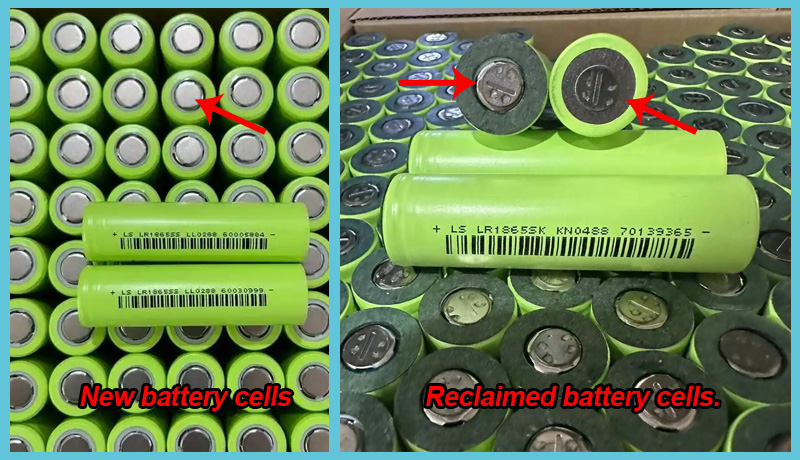
Premium batteries exclusively use brand-new, Grade A lithium-ion cells sourced from reputable manufacturers like Panasonic, Samsung SDI, LG Energy Solution, or Sony. These cells undergo rigorous testing for capacity, voltage consistency, internal resistance, and cycle life before leaving the factory. In contrast, cheap batteries frequently rely on recycled, rejected, or “second-life” cells salvaged from old electric vehicle (EV) batteries, power tools, or even discarded consumer electronics. These cells may have degraded capacity, inconsistent performance, or hidden damage, making them unreliable and unsafe.
- Manufacturing Precision and Standards:
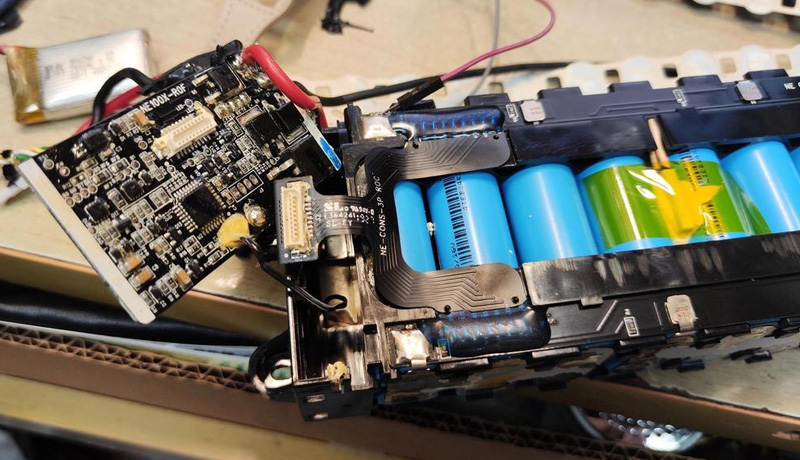
High-quality battery packs are assembled in ISO-certified facilities with automated production lines, ensuring precise welding, proper insulation, and consistent cell alignment. Each pack undergoes comprehensive quality control (QC) checks, including voltage balancing, short-circuit testing, and thermal imaging. Cheap batteries, however, are often cobbled together in unregulated workshops using manual labor, with little to no QC. Shoddy welding can lead to high resistance joints that generate heat, while poor insulation increases the risk of short circuits.
- The Brain: Battery Management System (BMS)
The BMS is the unsung hero of any lithium battery pack, acting as its “intelligent guardian.” A premium BMS continuously monitors each cell’s voltage, the pack’s temperature, and the current flow. It prevents overcharging, over-discharging, overheating, and short circuits—all of which can lead to catastrophic failures. It also balances the voltage across cells to ensure they age uniformly, maximizing the pack’s overall lifespan. Cheap batteries often skimp on the BMS, using basic or non-functional versions that offer little to no protection. A faulty BMS is one of the primary causes of e-bike battery fires.
- Long-Term Durability and Cycle Life:
A genuine, high-quality lithium-ion battery pack typically offers a cycle life of 500 to 1,000 full charge-discharge cycles (or more, depending on chemistry and care). This translates to 2 to 5 years of reliable service under normal use. In contrast, a cheap battery using recycled cells might only last 100 to 200 cycles, or 6 to 12 months, before its capacity drops to an unusable level. This means you’ll end up replacing the cheap battery multiple times over the lifespan of a single premium battery, resulting in a much higher total cost of ownership (TCO).
- Safety Certifications and Compliance:
Reputable battery manufacturers invest heavily in safety testing and certifications to meet stringent global standards. Look for marks like UL 2271 (USA), CE EN 62133 (Europe), or IEC 62133. These certifications ensure the battery has passed rigorous tests for fire resistance, impact, vibration, and thermal abuse. Cheap batteries rarely undergo such testing and may not comply with local safety regulations, putting you at risk.
- Warranty and After-Sales Support:
Confidence in a product is often measured by the warranty it carries. Premium battery brands typically offer 1 to 3-year warranties, backing their products with responsive customer service and hassle-free replacements if issues arise. Cheap batteries, on the other hand, usually come with no warranty whatsoever. If they fail (or worse, catch fire), you have no recourse and are left to bear the cost and potential damages alone.
2. Inside the Cell: Understanding Lithium-Ion Cell Formats and Chemistries
Not all lithium-ion cells are created equal. Their performance, safety, and cost are heavily influenced by two factors: their physical format and their chemical composition. Understanding these will help you make a more informed choice.
2.1 Cell Formats: 18650 vs. 21700 vs. Others
The most common cylindrical cell formats used in e-bikes are the 18650 and the newer 21700. The numbers represent their dimensions in millimeters: (diameter x length). While seemingly similar, these differences have significant implications for battery pack design and performance.
| Feature |
18650 Cells |
21700 Cells |
| Dimensions |
18mm (diameter) x 65mm (length) |
21mm (diameter) x 70mm (length) |
| Typical Capacity |
2,500 – 3,600 mAh per cell |
4,000 – 5,000 mAh per cell |
| Energy Density |
Higher than older formats, but lower than 21700. |
20-30% higher energy density than 18650, allowing for smaller, lighter packs with longer range. |
| Current Handling (C-rate) |
Good, but limited by size. |
Superior, can deliver higher continuous and peak currents, beneficial for high-power e-bikes. |
| Cooling Performance |
Smaller surface area, can heat up more during high discharge. |
Larger surface area allows for better heat dissipation, improving safety and longevity. |
| Cost |
Mature technology, lower cost per cell (but more cells needed for same capacity). |
Newer technology, slightly higher cost per cell, but fewer cells needed, potentially offsetting the cost. |
| Pack Design Flexibility |
Smaller size offers more flexibility for fitting into tight frames. |
Larger size may limit design options but can simplify pack construction (fewer cells to connect). |
| Common Applications |
Mid-range e-bikes, older models, compact designs. |
High-performance e-bikes, long-range commuters, new model year releases. |
Other formats, like pouch cells (often used in custom or integrated frame designs) or prismatic cells, exist but are less common in mainstream replaceable e-bike batteries due to their specific packaging and integration requirements.
2.2 Battery Chemistries: NCM vs. LFP – Safety vs. Performance
The chemical composition of the lithium-ion cell’s cathode is another crucial factor. The two primary chemistries used in e-bikes are NCM (Nickel-Cobalt-Manganese) and LFP (Lithium Iron Phosphate).
| Feature |
NCM (Nickel-Cobalt-Manganese) |
LFP (Lithium Iron Phosphate) |
| Energy Density |
Higher (150-200 Wh/kg). Enables lighter batteries with longer range. |
Lower (100-160 Wh/kg). Batteries are heavier for the same capacity. |
| Safety |
Good, but can be unstable at very high temperatures or if physically damaged, potentially leading to thermal runaway (fire/explosion). |
Excellent. Much more thermally stable. Resists thermal runaway even under severe abuse (puncture, short circuit). Non-toxic. |
| Cycle Life |
Good (1000-2000 cycles) |
Excellent (2000-3000+ cycles). Can last significantly longer. |
| Nominal Voltage |
Higher (3.6-3.7V per cell). Fewer cells needed for a given pack voltage. |
Lower (3.2V per cell). More cells needed for the same pack voltage. |
| Low-Temperature Performance |
Better. Maintains more capacity in cold weather. |
Poorer. Capacity drops significantly in cold temperatures (below 0°C/32°F). |
| Cost |
Higher, due to cobalt content (a rare and expensive metal). |
Lower, uses abundant and cheaper materials (iron, phosphate). |
| Typical Use Case |
Urban commuters, performance e-bikes, users prioritizing range and weight. Popular in European market. |
Heavy-duty applications (cargo bikes, delivery bikes), users prioritizing absolute safety and longevity. Popular in some American markets and for off-road use. |
Expert Tip: For most European and North American riders, NCM batteries offer the best balance of range, weight, and performance, especially if you ride in cooler climates. If safety is your absolute top priority (e.g., for a children’s e-bike or if you store the battery indoors), or if you use your bike in very hot conditions, an LFP battery might be worth considering, despite the weight and range trade-offs.
3. The Hidden Crisis: The Dangers of “Refurbished” and “Second-Life” Batteries
One of the most insidious practices in the low-cost e-bike battery market is the use of “refurbished” or “second-life” cells. These are cells that have been extracted from used or defective battery packs, often from electric vehicles (EVs), and repackaged into new e-bike batteries. While the idea of recycling might sound environmentally friendly, the reality is far from it and poses severe risks.
3.1 How the Scam Works: From Discarded EV to Your E-Bike
- Extraction: Unscrupulous operators purchase end-of-life EV battery packs (which are considered hazardous waste) at a fraction of their original cost. These packs are then manually dismantled, often using brute force with tools like crowbars or angle grinders. This process frequently damages the individual cells, creating internal shorts or weakening their structural integrity.
- Sorting (or Lack Thereof): The extracted cells are rarely tested for capacity, internal resistance, or remaining cycle life. Instead, they are roughly sorted by appearance and arbitrarily grouped together. Cells from different manufacturers, with different ages, capacities, and histories, are often mixed in the same “new” pack.
- Re-packaging: These mismatched and potentially damaged cells are soldered (often poorly) into a new casing, connected to a minimal or non-functional BMS, and given a fresh coat of paint or a new sticker. The result is a battery that looks new but is a ticking time bomb.
- Marketing: These batteries are then sold online or in small shops under generic brand names, often with exaggerated claims about capacity (“50Ah!”) and performance, at prices that seem too good to be true.
3.2 Why These Batteries Are a Disaster Waiting to Happen
The risks associated with refurbished batteries are manifold and severe:
- Catastrophic Safety Hazards: The greatest risk is thermal runaway. A single damaged or degraded cell in the pack can fail during charging or use, generating excessive heat. This heat can spread to adjacent cells, causing them to fail as well, leading to a violent fire or explosion. Unlike genuine batteries, there is no reliable BMS to prevent or contain this.
- Abysmal Performance and Rapid Degradation: Even if they don’t catch fire immediately, these batteries perform poorly. Mixed cells with different capacities cause “cell imbalance,” where some cells are overcharged while others are over-discharged, accelerating their death. A battery advertised as 20Ah might only deliver 10Ah of usable capacity, and this can drop to 5Ah within a few months of use.
- Financial Loss: Buying a cheap refurbished battery is a false economy. You’ll likely need to replace it within a year, and in the meantime, you’ll suffer from reduced range and unreliable performance. Worse, if the battery fails catastrophically, it could damage your e-bike’s motor or controller, leading to even higher repair costs.
- Legal and Insurance Issues: Using an uncertified, potentially dangerous battery may void your e-bike’s warranty. In the event of an accident or fire caused by such a battery, your insurance company may refuse to cover the damages, leaving you financially liable.
Real-World Warning: In 2022, fire departments across major European cities reported a significant increase in e-bike-related fires, many traced back to non-genuine, refurbished batteries. One such incident in a Berlin apartment building resulted in extensive damage and injuries. Always prioritize safety over saving a few dollars.
4. Becoming a Battery Detective: How to Spot a Fake or Refurbished Battery
Armed with knowledge, you can protect yourself from unscrupulous sellers. Here are seven telltale signs to identify a fake or refurbished e-bike battery:
- Price Check – If It’s Too Good to Be True, It Is: This is the most obvious red flag. A genuine 48V 20Ah battery using brand-new cells will cost at least $300-$400. If you find one for $100-$150, it’s almost certainly using recycled cells or is counterfeit.
- Scrutinize the Labeling:
- Brand Name: Look for a well-known, reputable brand. Generic labels like “Powerful E-Bike Battery” or “Universal Fit” are suspicious.
- Specifications: Check for clear, consistent printing of voltage (V), capacity (Ah/Wh), and cell type. Blurry, misspelled, or inconsistent text is a bad sign.
- Certifications: Look for genuine UL, CE, or other relevant safety certification marks. Fake batteries often have fake or expired certifications.
- Serial Number & Date Code: A genuine battery will have a unique serial number and a manufacturing date. If these are missing, illegible, or look like they’ve been tampered with, be wary.
- Inspect the Physical Quality:
- Casing: The plastic casing should be sturdy, well-molded, and free of cracks, burrs, or rough edges. A cheap, flimsy casing is a sign of poor quality.
- Connections: The charging port and discharge connector should be robust, with no loose wires or poor soldering visible (if the case allows). Look for signs of glue or tape holding things together.
- Weight: Lithium-ion cells have a specific weight. A genuine 48V 20Ah NCM battery weighs roughly 5-6kg. If the battery feels significantly lighter (e.g., 3-4kg), it’s likely using fewer cells or degraded ones.
- Verify the Brand and Serial Number: Take the brand name and serial number and do a quick online search. Check the manufacturer’s official website to see if the model exists. Some brands allow you to verify serial numbers online. If no information is found, or if the seller is evasive, walk away.
- Ask for Documentation: Request a copy of the safety certification (e.g., UL 2271), a test report, or proof of purchase from the original cell manufacturer. A legitimate seller will be happy to provide these. A scammer will make excuses or ignore your request.
- Check the Seller’s Reputation: If buying online, check the seller’s feedback, ratings, and how long they’ve been in business. Avoid sellers with little history, vague descriptions, or a pattern of negative reviews mentioning defective or fake products.
- Trust Your Instincts: If something feels off—whether it’s the seller’s behavior, the product’s appearance, or the deal itself—don’t proceed. It’s better to spend a little more and have peace of mind than to risk your safety and finances.
5. Maximizing Your Investment: How to Extend the Lifespan of Your E-Bike Battery
A high-quality e-bike battery is a significant investment. With proper care and maintenance, you can maximize its lifespan and get the most out of your money. Here are eight expert tips:
- Charge Smartly:
- Avoid Extreme States of Charge: Try to keep your battery between 20% and 80% charge when not in use for long periods. Fully charging (100%) and then leaving it unused for weeks can stress the cells. Similarly, depleting it completely (0%) regularly can damage cells.
- Use the Right Charger: Always use the charger provided by the battery manufacturer or a certified replacement. Using a charger with the wrong voltage or current can damage the battery and BMS.
- Don’t Charge in Extreme Temperatures: Charging a battery that’s very hot (e.g., after a long ride) or very cold (e.g., left in a freezing garage) can degrade its performance and lifespan. Let it reach room temperature first.
- Store Properly:
- Partial Charge for Storage: If you won’t be using your e-bike for more than a few weeks, store the battery with a 40-60% charge.
- Cool, Dry Place: Store the battery in a cool, dry environment away from direct sunlight and heat sources (like radiators or stoves). Avoid storing it in a hot car.
- Ride Responsibly:
- Gradual Acceleration: Avoid rapid, full-throttle acceleration whenever possible. This draws high current from the battery, generating heat and stressing the cells.
- Use the Right Assist Level: Use lower assist levels when riding on flat ground or when you don’t need extra power. This reduces the load on the battery.
- Pedal Assist: Remember, e-bikes are “assist” bikes. Pedaling more reduces the demand on the battery, extending range and battery life.
- Keep It Clean and Dry: Regularly clean the battery contacts with a dry cloth to ensure good electrical connection. Avoid getting the battery wet, especially the charging port. If it does get wet, dry it thoroughly before charging.
- Regularly Check the BMS: While you can’t directly “check” the BMS, being aware of your battery’s performance can indicate BMS health. If you notice sudden drops in range, inconsistent power delivery, or the battery cutting out unexpectedly, it might be a sign of BMS issues or cell imbalance.
- Avoid Deep Discharges: Try not to let the battery voltage drop below the manufacturer’s recommended minimum. Most e-bikes will cut power before this happens, but consistently riding until the battery dies can shorten its life.
- Periodic Full Balancing Charge: Every few months, allow the battery to charge fully and then leave it on the charger for an additional 1-2 hours after the green light comes on. This allows the BMS to balance the cells, ensuring they are all charged to the same level.
- Get It Serviced: Some manufacturers offer battery servicing or cell balancing for older packs. If your battery is out of warranty but still has some life left, this can be a cost-effective way to extend its usability.
6. The Road Ahead: Future Trends in E-Bike Battery Technology
The field of lithium-ion battery technology is evolving rapidly, and e-bikes stand to benefit significantly from these advancements. Here are a few emerging trends to watch for in the coming years:
- Solid-State Batteries: Considered the “holy grail” of battery technology, solid-state batteries replace the liquid electrolyte with a solid material. They offer significantly higher energy density (potentially doubling range), faster charging times, and much improved safety. While still in development for widespread commercial use, some e-bike manufacturers are already exploring prototypes.
- Better Fast-Charging Solutions: New cell chemistries and BMS technologies are enabling faster charging without compromising battery life. We may soon see e-bike batteries that can be charged to 80% in 15-30 minutes.
- Integration with Smart Grids and V2G (Vehicle-to-Grid): As e-bikes become more connected, their batteries could potentially serve as distributed energy storage units, feeding power back to the grid during peak demand (V2G) and helping to stabilize the electrical system.
- More Sustainable and Recyclable Designs: With growing environmental concerns, manufacturers are focusing on making batteries more easily recyclable and using more sustainable materials (e.g., reducing or eliminating cobalt in NCM batteries).