How to Choose a Reliable 52V Ebike Battery for DIY Electric Bikes: Power Matching, BMS Insights & Top 3 Picks
Looking for a reliable 52V ebike battery for your DIY electric bike? This guide breaks down how a 52V ebike battery pairs with motor power, BMS current limits, and cell types (18650 vs. 21700), plus highlights top-quality 52V ebike battery options to boost your custom build’s performance and safety.
Why 52V Ebike Batteries Are Ideal for DIY Electric Bikes
For DIY ebike builders, voltage choice directly impacts performance—and 52V ebike batteries strike a perfect balance between power and efficiency. Unlike lower-voltage alternatives (36V or 48V), a 52V battery delivers higher nominal voltage, which translates to stronger motor output, faster acceleration, and easier hill climbing. This makes it a top choice for custom builds designed to handle rough terrain, heavy loads, or long-distance commutes.
However, unlocking a 52V ebike battery’s full potential requires more than just plugging it in. You need to understand how it interacts with your motor, the critical role of the Battery Management System (BMS), and how cell type and discharge rate (C-rate) affect overall performance. Let’s dive into these key concepts to help you make an informed choice.
52V Ebike Battery: Matching to Motor Power (And BMS Limits)
The success of your DIY ebike hinges on how well your 52V ebike battery matches your motor’s power rating. The relationship between battery voltage, current, and motor power is defined by the formula: Power (W) = Voltage (V) × Current (A). Here’s what this means for 52V systems:
- Typical Motor Power Range for 52V Batteries: Most 52V ebike batteries support motors ranging from 500W to 1500W. For example, a 52V battery with a 30A BMS (current limit) can theoretically power a motor up to 1560W (52V × 30A), but manufacturers often cap it at 1000W to ensure battery longevity and safety. A 40A BMS, by contrast, can handle up to 2080W (52V × 40A), though real-world use typically tops out at 1500W for reliability.
- Why BMS Determines Motor Power Limits: The BMS is the "brain" of your 52V ebike battery. It monitors current, voltage, and temperature to prevent overcharging, over-discharging, short circuits, and overheating. Crucially, the BMS sets a maximum discharge current—this is the upper limit of power the battery can supply to the motor. If you pair a 52V battery with a 30A BMS to a 1500W motor, the BMS will restrict current to 30A, limiting the motor’s output and avoiding damage. For DIY builds, always choose a BMS current rating that aligns with your motor’s power needs (e.g., 30A for 0-1000W motors, 40A for 0-1500W motors).
Pro Tip: Never exceed your BMS’s current limit. A mismatched setup (e.g., a 2000W motor with a 30A BMS 52V battery) will trigger the BMS’s safety shutdown, causing sudden power loss or permanent BMS damage.
18650 vs. 21700 Cells: Which Works Better for 52V Ebike Batteries?
The cells inside your 52V ebike battery dictate its capacity, power output, and lifespan. The two most common cell types for ebikes are 18650 and 21700—named for their dimensions (diameter × length in millimeters: 18×65mm vs. 21×70mm). Here’s how they compare for DIY builds:
| Feature |
18650 Cells |
21700 Cells |
| Energy Density |
Lower (2-3Wh/cm³) |
Higher (3-4Wh/cm³) |
| Capacity per Cell |
2-3Ah |
3-5Ah |
| Power Output |
Ideal for 500-1000W motors |
Better for 1000-1500W motors (higher discharge current) |
| Cycle Life |
1000+ cycles (mature, reliable tech) |
1000+ cycles (improved durability for high-power use) |
| DIY Suitability |
Budget-friendly, easy to source |
Great for high-performance builds (longer range, more power) |
For most DIYers: If you’re building a commuter ebike or prioritizing cost, 18650-based 52V batteries are a solid choice. If you need to tackle steep hills, carry heavy loads, or extend range, 21700 cells are worth the investment—they deliver more power and capacity in a similar footprint.
C-Rate Basics: How It Affects 52V Ebike Battery Performance
C-rate (discharge rate) measures how quickly a battery can release its energy—and it’s critical for DIY ebikes, especially those focused on power. For 52V ebike batteries, the standard C-rate range is 2-3C, meaning the battery can discharge 2-3 times its capacity in one hour. Here’s why this matters:
- Calculating Discharge Current from C-Rate: A 52V 14Ah battery with a 3C rate can deliver a maximum discharge current of 42A (14Ah × 3C = 42A). This provides enough power for short bursts (e.g., climbing hills or accelerating) without overheating.
- C-Rate and Hill Climbing: Steep inclines demand instantaneous power. A 3C 52V battery delivers more current than a 2C battery of the same capacity, making it easier to climb hills without losing speed. For flat commutes, a 2C rate is usually sufficient.
- Avoiding Long-Term High-C Discharge: While 3C is safe for short bursts, continuous high-C discharge (e.g., 10+ minutes of uphill riding) can reduce battery life. Always match the C-rate to your typical riding conditions.
Step-by-Step: Match Your 52V Ebike Battery to Your DIY Motor
Follow these steps to ensure your 52V ebike battery and motor work together seamlessly:
- Define Your Motor Power Needs: Start by identifying how you’ll use your DIY ebike. For flat commutes, a 500W motor works. For hills or heavy loads, opt for 750W-1500W. Write down this power rating.
- Calculate Required BMS Current: Use the formula Current (A) = Motor Power (W) ÷ 52V. For a 1000W motor, you need at least 19.2A (1000W ÷ 52V ≈ 19.2A). Choose a BMS with a 10-20% higher current rating (e.g., 30A) for safety.
- Choose Cell Type (18650 vs. 21700): For motors ≤1000W or budget builds, go with 18650 cells. For motors >1000W or longer range, select 21700 cells.
- Verify C-Rate: Ensure the battery’s C-rate is 2-3C. For motors >1000W, a 3C rate is recommended to handle peak power demands.
- Check Physical Compatibility: Measure your ebike’s battery compartment (down tube or seat tube) and compare it to the 52V battery’s dimensions. Most DIY-friendly 52V batteries include mounting bases for easy installation.
Top 3 Reliable 52V Ebike Batteries for DIY Electric Bikes
To simplify your search, we’ve curated three high-quality 52V ebike batteries from STDBattery—each designed for DIY builds, with robust BMS protection, durable cells, and hassle-free installation. Click the links to learn more or purchase.
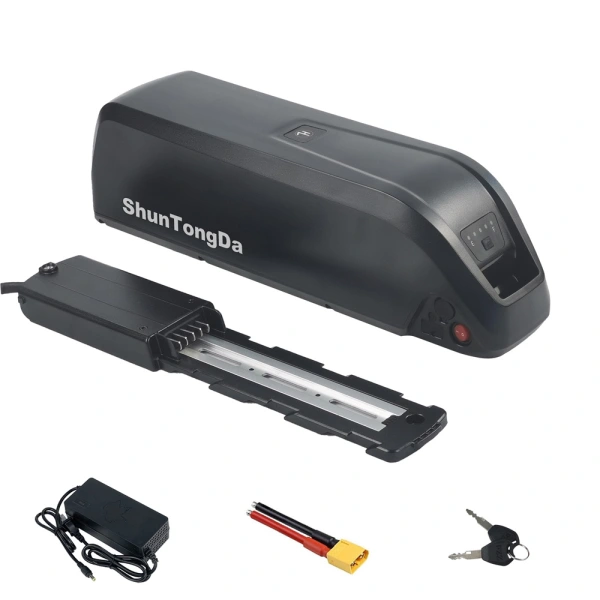
Hailong 52V 14Ah/17.5Ah/21Ah Ebike Battery (30A BMS, 0-1000W Motors)
View Product
- 30A BMS for safe use with 0-1000W motors (perfect for commuters and light off-roading)
- Brand-new 18650 lithium cells: 1000+ charge cycles for long-term reliability
- Built-in USB port: Charge phones/electronics on the go (ideal for DIY tours)
- Safety lock and 5-pin base: Prevents theft and easy down-tube installation
- LED power indicator: Check remaining charge (100% to 0% via 5 LEDs) at a glance
- Complete kit: Includes charger, 2 keys, XT60 adapter, and user manual for quick setup
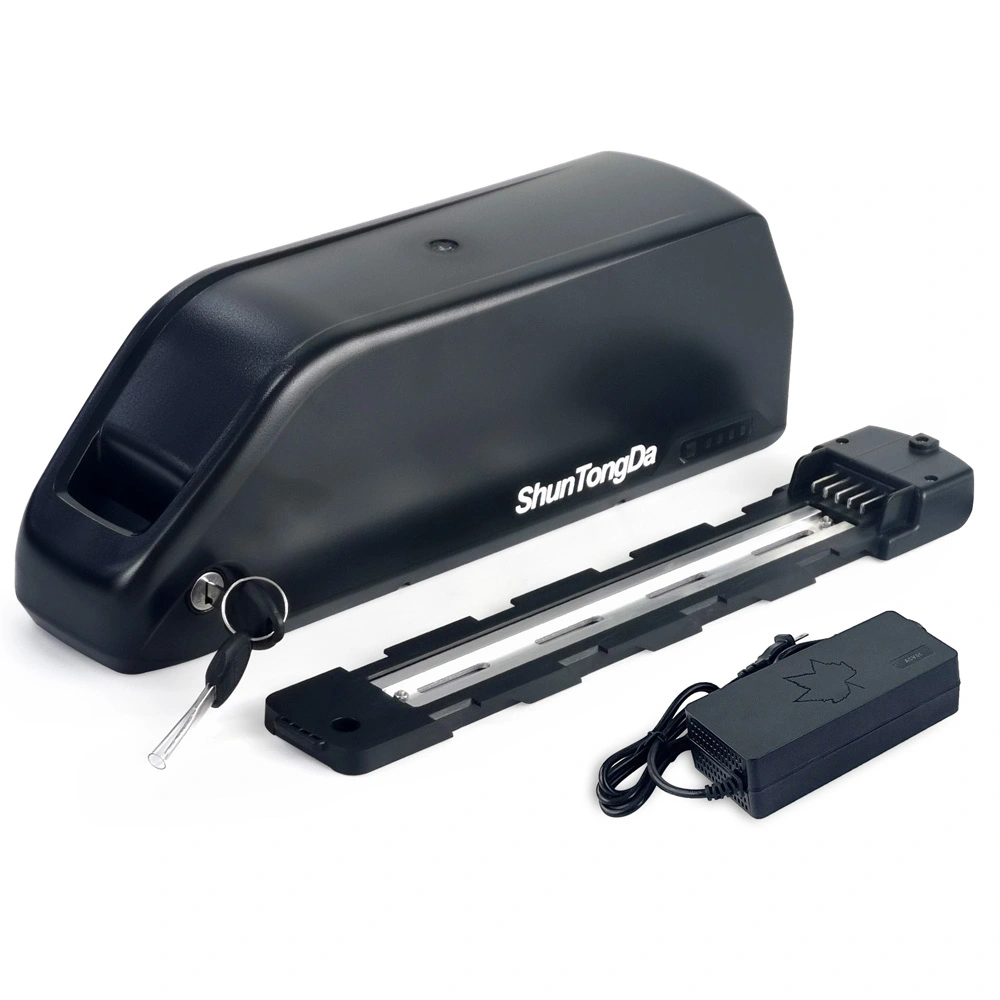
52V 20Ah Ebike Battery (21700 Cells, 40A BMS, 0-1500W Motors)
View Product
- High-performance 21700 cells: 20Ah capacity for longer range and 0-1500W motor support
- 40A BMS with 8 safety protections (short-circuit, overheat, drop protection, etc.)
- Waterproof/dustproof design: Suitable for off-road DIY builds (handles rain and dirt)
- Compatible with BAFANG, Voilamart, AW, and other popular hub motors
- XT60 discharge port and 5-pin base: Easy integration with most DIY conversion kits
- 1000+ charge cycles and 3A fast charging: Get back on the road quickly
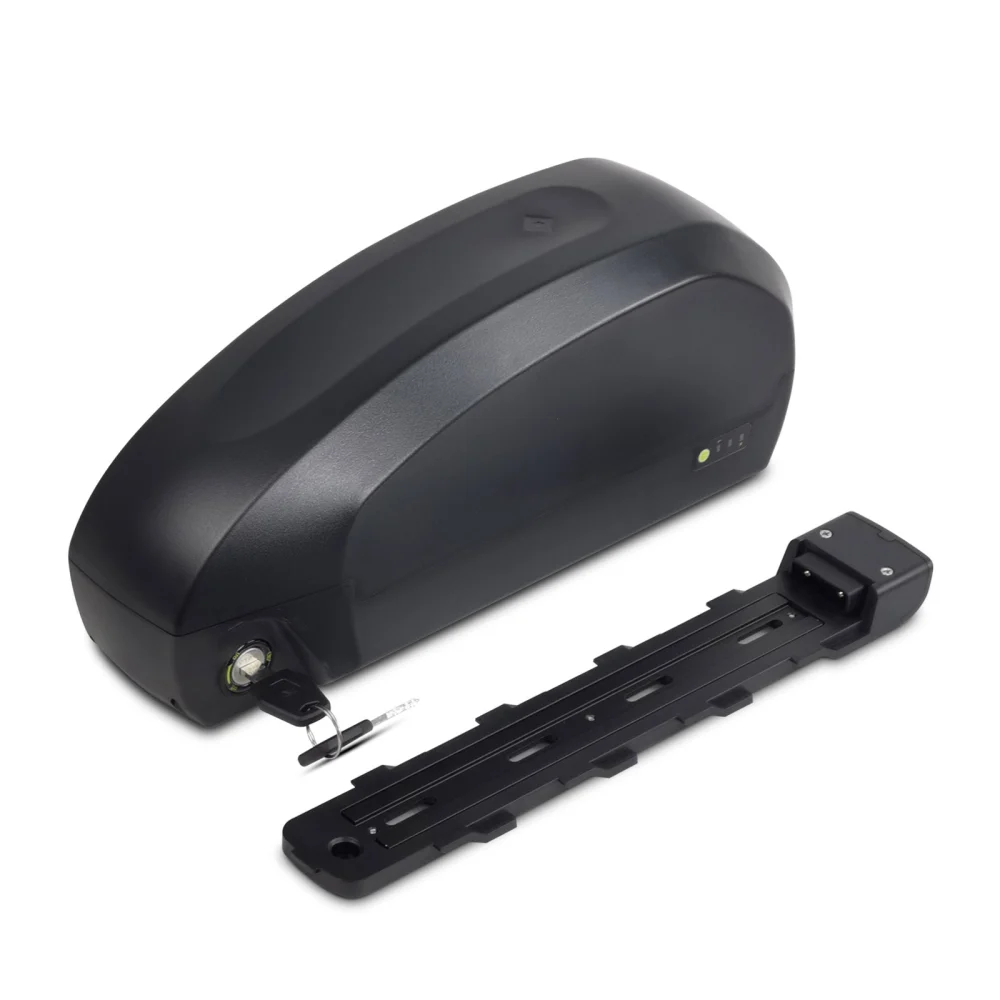
52V 21Ah Ebike Battery (40A BMS, 0-1200W Motors, KELIN QC Compatible)
View Product
- 40A BMS and 21Ah capacity: Powers 0-1200W motors with strong hill-climbing performance
- Compatible with KELIN QC ebikes and most DIY down-tube battery setups
- 6-pin base and XT60 discharge port: Flexible connection for custom motor configurations
- Safety lock and LED power indicator: Prevents theft and monitors charge status
- Robust 6kg construction: Durable for heavy-duty DIY use (e.g., cargo ebikes)
- All-in-one kit: Includes charger, 2 keys, and user manual—ready to install out of the box
Final Tips for Choosing a Reliable 52V Ebike Battery
To avoid safety risks and maximize your DIY ebike’s performance, keep these tips in mind:
- Buy from reputable brands (like STDBattery) with clear specs and global after-sales support (China/American/European centers for easy troubleshooting).
- Look for safety certifications (e.g., CCC for lithium batteries) to avoid "no-name" products with hidden risks.
- Never modify the BMS or cells—this voids safety protections and can cause fires.
- Charge the battery between 0-45°C and store it in a cool, dry place to extend its lifespan.