The Complete Guide to Selecting the Optimal Lithium Battery for Your E-Bike
A Comprehensive Technical Analysis of Voltage Compatibility, Capacity Calculation, Chemistry Selection, and Performance Optimization for Electric Bicycle Power Systems
Selecting the perfect lithium battery for your electric bicycle represents one of the most critical technical decisions impacting your riding experience. This comprehensive guide provides detailed, engineering-focused analysis to help you navigate voltage compatibility, calculate true range requirements, understand discharge characteristics for different terrains, and select the optimal battery chemistry for your specific needs.
Chapter 1: Understanding E-Bike Power Systems and Voltage Compatibility
The symbiotic relationship between your e-bike's motor and battery is governed by fundamental electrical principles that must be perfectly aligned for optimal performance, efficiency, and safety. Mismatching components can lead to reduced performance, premature failure, or even safety hazards.
1.1 Motor Power Specifications and Electrical Requirements
Electric bicycle motors are rated by their continuous power output, typically measured in watts (W). Common configurations range from 250W for European-style city bikes to 750W, 1000W, or even 1500W+ for high-performance and off-road models. However, the wattage rating alone tells an incomplete story. Each motor is engineered to operate at a specific system voltage—most commonly 36V, 48V, or 52V in modern e-bikes.
Critical Compatibility Rule
Your battery's nominal voltage must exactly match your motor and controller's designed input voltage. A 48V motor will perform poorly with a 36V battery (resulting in weak torque and insufficient speed), while connecting a 36V motor to a 48V battery risks catastrophic damage to the controller and motor windings from overvoltage stress.
1.2 Current Draw Analysis and Battery Discharge Capability
While voltage establishes compatibility, current (measured in Amps) determines performance delivery. Your motor's controller regulates how much current is drawn from the battery during operation. The relationship is defined by the formula: Power (W) = Voltage (V) × Current (A). For example, a 500W motor operating at 48V nominally draws approximately 10.4A (500W ÷ 48V = 10.4A).
However, real-world conditions create peak current demands that significantly exceed nominal values:
- Initial acceleration from standstill
- Steep hill climbing (especially with cargo or heavier riders)
- Riding against strong headwinds
- Operating at maximum assist levels
During these conditions, peak currents can reach 150-200% of nominal values. A 500W system might transiently draw 20-25A rather than its nominal 10.4A.
Battery Discharge Rating: Understanding C-Rate
Batteries specify their discharge capability through maximum continuous discharge current (in Amps) or via a C-rating. The C-rate represents discharge capability relative to capacity. For a 10Ah battery:
• 1C = 10A discharge
• 2C = 20A discharge
• 3C = 30A discharge
Your battery's discharge capability must exceed your controller's maximum current draw, especially during peak demands.
Battery Minimum Continuous Discharge ≥ Controller Maximum Continuous Current
Chapter 2: Calculating True Range Requirements
Range anxiety is a primary concern for e-bike users. Moving beyond vague estimates requires understanding energy consumption metrics and the multitude of factors affecting real-world performance.
2.1 Understanding Battery Capacity Metrics
While retailers often highlight Amp-hours (Ah), the true measure of energy storage is Watt-hours (Wh), calculated as:
Voltage (V) × Amp-hours (Ah) = Watt-hours (Wh)
For example, a 48V 14Ah battery contains 672Wh of energy (48 × 14 = 672). This standardized metric allows direct comparison across different voltage systems and serves as the foundation for accurate range estimation.
2.2 Comprehensive Range Estimation Methodology
Real-world energy consumption varies dramatically based on multiple interacting variables:
| Factor |
Effect on Energy Consumption |
Typical Impact |
| Rider & Cargo Weight |
Increased mass requires more energy for acceleration and climbing |
+10-30% per additional 50lbs/23kg |
| Terrain & Elevation |
Hill climbing converts electrical energy to gravitational potential energy |
+80-150% for hilly routes vs. flat |
| Riding Speed |
Aerodynamic drag increases exponentially with speed |
+40% at 20mph vs 15mph |
| Temperature Conditions |
Lithium batteries lose efficiency in cold temperatures |
-15-30% capacity at 32°F/0°C |
| Tire Pressure & Type |
Increased rolling resistance with under-inflation or knobby tires |
+10-25% for low pressure/off-road tires |
| Wind Conditions |
Headwinds create additional aerodynamic resistance |
+20-50% in strong headwinds |
2.3 Practical Range Calculation Process
Follow this systematic approach to determine your required battery capacity:
- Step 1: Establish Baseline Consumption - Typical e-bikes consume 15-25 Wh per mile under moderate conditions. Aggressive riding can reach 30-35 Wh/mi, while efficient use may achieve 10-12 Wh/mi.
- Step 2: Apply Terrain Multiplier - Multiply baseline by 1.8 for hilly terrain, 2.0+ for mountainous routes.
- Step 3: Calculate Required Energy - Desired Range (miles) × Adjusted Consumption (Wh/mi) = Required Capacity (Wh).
- Step 4: Add Safety Buffer - Never plan to use 100% of battery capacity. Add 15-20% to preserve battery health and account for unexpected conditions.
- Step 5: Convert to Battery Specification - Required Wh ÷ System Voltage = Minimum Ah rating.
Example Calculation
For a 30-mile commute with moderate hills using a 48V system:
1. Baseline: 20 Wh/mi × 1.8 (hills) = 36 Wh/mi
2. Total Energy: 30 miles × 36 Wh/mi = 1,080 Wh
3. With Buffer: 1,080 Wh × 1.15 = 1,242 Wh
4. Minimum Battery: 1,242 Wh ÷ 48V = 25.9 Ah
→ Select a 48V 26Ah or larger battery
Chapter 3: Terrain Analysis and Performance Optimization
Different riding environments create distinct demands on battery systems. Understanding these stress profiles enables optimal battery selection for your specific conditions.
3.1 Hilly and Mountainous Terrain Requirements
Climbing transforms electrical energy into gravitational potential energy. The power required increases linearly with both total weight and grade steepness. For consistently hilly routes:
- Prioritize High Discharge Capability - Select batteries with 2C-3C discharge ratings or high continuous current specifications (e.g., 30A+ for a 48V system).
- Consider Higher Voltage Systems - 52V batteries (often backward compatible with 48V controllers) provide a higher voltage "base," reducing voltage sag during high-current draws.
- Increase Capacity Significantly - Apply a 1.5× to 2.0× multiplier to flat-terrain capacity requirements.
- Monitor Thermal Management - Extended climbing generates heat. Ensure adequate battery cooling and consider packs with temperature monitoring.
3.2 Long-Distance Commuting and Touring
For riders covering extended distances where charging opportunities may be limited:
- Maximize Energy Density - Lithium-ion cells (particularly high-capacity variants like Samsung 50E or LG M50LT) offer the highest Wh/kg ratio.
- Optimize for Moderate, Consistent Discharge - These rides typically use lower assist levels. Focus on high Ah ratings rather than extreme C-rates.
- Plan Charging Logistics - If destination charging isn't available, your single-charge range must cover the entire round trip, often necessitating the largest capacity your bike can accommodate.
3.3 Off-Road and High-Performance Applications
Aggressive riding combines the sustained high currents of climbing with bursts of intense acceleration:
- Ultra-High Discharge Cells are Essential - Prioritize power-optimized cells (Samsung 20S, Molicel P42A) over capacity-optimized ones.
- Robust Mechanical Construction - The battery enclosure must withstand vibration, impacts, and potential moisture (IP67 rating recommended).
- Advanced Battery Management - A sophisticated BMS with temperature monitoring, cell balancing, and high-current capability is non-negotiable.
Chapter 4: Battery Chemistry, Technology, and Long-Term Considerations
Beyond basic specifications, understanding battery chemistry and supporting technologies determines long-term reliability, safety, and total cost of ownership.
4.1 Lithium-Ion vs. Lithium Iron Phosphate (LiFePO4)
| Characteristic |
Lithium-Ion (NMC/NCA) |
Lithium Iron Phosphate (LiFePO4) |
| Energy Density |
High (180-250 Wh/kg) |
Moderate (90-160 Wh/kg) |
| Cycle Life |
500-1,000 cycles (to 80% capacity) |
2,000-5,000+ cycles |
| Thermal Stability |
Moderate - requires careful thermal management |
Excellent - inherently safer chemistry |
| Operating Temperature |
32°F to 113°F (0°C to 45°C) |
-4°F to 140°F (-20°C to 60°C) |
| Cost per Wh |
Lower initial cost |
Higher initial cost, lower lifetime cost |
| Best Application |
Maximum range, weight-sensitive applications |
Safety-critical, high-cycle applications, extreme temperatures |
4.2 Battery Management System (BMS) Requirements
The BMS is the battery's intelligent control system. A high-quality BMS must provide:
- Cell Balancing - Active or passive balancing to maintain all cells at equal voltages
- Protection Circuits - Over-charge, over-discharge, over-current, short-circuit, and temperature protection
- Communication Interface - Bluetooth, CAN bus, or UART for monitoring state of charge, cell voltages, temperature, and health metrics
- Temperature Monitoring - Multiple sensors to prevent operation outside safe ranges
- State of Health (SOH) Tracking - Estimation of remaining useful life based on usage patterns
4.3 Form Factor and Integration Considerations
Battery placement affects both aesthetics and handling characteristics:
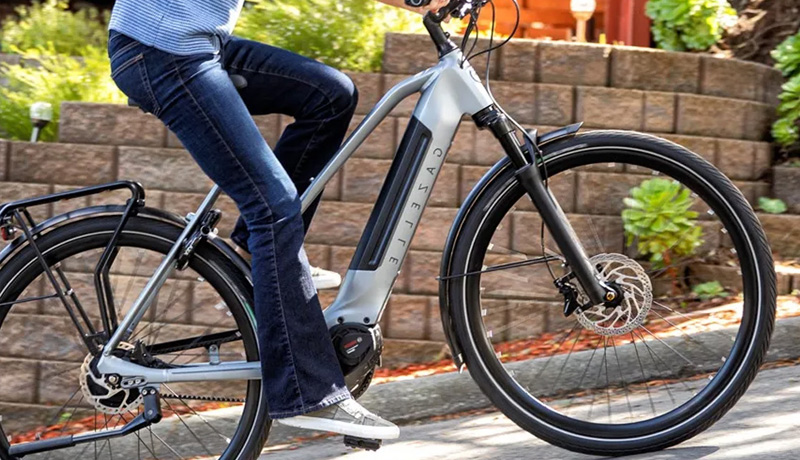
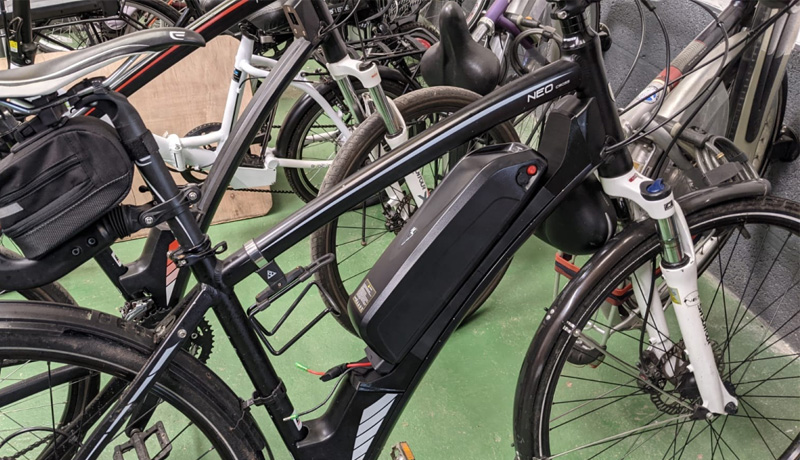
- Integrated/Downtube Batteries - Sleek, aerodynamic, often lockable. Limited by frame dimensions. Best for balanced weight distribution.
- Rack-mounted Batteries - Higher capacity potential, easier removal. Raises center of gravity, affecting handling, especially when loaded.
- External Frame-mounted - Maximum flexibility for capacity. May require custom mounting solutions and affects bike aesthetics.
- Weight Distribution - Central, low mounting improves handling stability. High rear mounting can create "pendulum effect" in corners.
Need Professional Guidance?
Selecting the perfect battery involves balancing multiple technical parameters—voltage compatibility, discharge characteristics, capacity requirements, chemistry selection, and physical integration. Our engineering team specializes in analyzing your specific e-bike model, motor specifications, riding patterns, and terrain challenges to recommend the optimal battery solution.
Share your e-bike specifications and riding requirements with us, and we'll provide a customized battery recommendation that maximizes your range, performance, and long-term satisfaction.
Get Your Custom Battery Recommendation