The Hidden Dangers of DIY E-Bike Batteries: Technical Flaws and Liability Risks.
The appeal of customizing and cost-saving drives many enthusiasts toward building their own lithium-ion (Li-ion) e-bike battery packs. However, Li-ion batteries are energy-dense electrochemical devices that require **precision engineering and validated safety protocols**. For professionals in the battery industry, the risks associated with DIY assembly are not hypothetical; they represent critical failure points that can lead to catastrophic thermal runaway, fire, and severe legal liability. We present a rigorous, technical analysis of why this practice should be avoided.
Part I: The Technical Demands of Professional Assembly
1. The Critical Imperative of Low-Resistance Interconnects
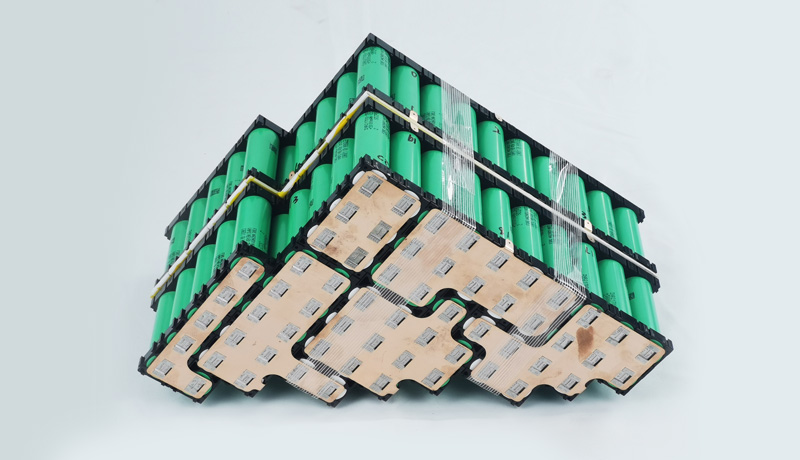
A professional pack relies on high-quality spot welding using pure nickel strips, not nickel-plated steel or solder. The weld must be calibrated precisely to create a mechanical bond without excessive heat penetration that damages the cell's internal chemistry.
- Failure Mode: DIY welding often results in high joint resistance. During high discharge (accelerating uphill), high resistance generates intense localized heat, directly at the terminal. This heat can propagate into the cell, melting the internal polyethylene separator (which has a low melting point, typically $\approx 130^\circ C$), causing an internal short circuit.
- Industry Standard: Professional welders maintain resistance below $0.5 m\Omega$ per joint to ensure minimal thermal load.
2. The Inadequacy of Generic Battery Management Systems (BMS)
The BMS is the firmware and hardware responsible for balancing, charging, and fault protection. A generic BMS lacks the crucial programming specific to high-power e-bike motors.
- Current Rating Mismatch: E-bike motors can demand high pulse currents (up to 40-50A). A generic BMS might be rated for less, leading to the premature failure of its FETs (Field-Effect Transistors) during peak demand. A failed BMS means the battery operates completely unprotected.
- Inaccurate Cell Balancing: Precise balancing is vital for longevity and safety. Generic BMS algorithms often fail to balance cell groups accurately, especially under dynamic loads, resulting in some cells being chronically overcharged or over-discharged—a direct initiator of thermal runaway.
- Lack of Communication Protocol: For proprietary e-bike systems (like Bosch or Shimano), the DIY pack will lack the necessary CAN Bus or other communication firmware, rendering the pack electronically incompatible and unsafe for the motor.
3. Mechanical Failure and Vibration Tolerance
E-bikes are subjected to constant vibration, road shock, and occasional impacts. Professional packs are engineered using fire-retardant materials, structured cell holders, and robust potting compounds to absorb mechanical stress.
DIY packs often lack adequate insulation or mechanical support. Over time, vibration causes:
- Wire Abrasion: Wiring insulation wears thin, leading to wire-to-wire or wire-to-casing short circuits.
- Internal Movement: Unsecured cells shift, putting strain on delicate weld points and creating micro-fractures in the cell housing, increasing the risk of internal shorting.
Part II: Safety Certification and Legal Liability
4. The Legal and Financial Risk of Uncertified Products
A manufactured battery pack adheres to certified safety standards like UL 2271 or IEC 62133. These certifications confirm the product's safety compliance under stress testing. A DIY battery carries no such certification.
CRITICAL LIABILITY WARNING: In the event of a fire or explosion caused by a DIY battery pack, the builder assumes full legal and financial liability for any resulting property damage, injury, or death. Insurance claims are routinely denied when the cause is attributed to an uncertified, user-assembled electrical device. The monetary savings from building a DIY pack are negligible compared to the potential financial ruin from a liability lawsuit.
5. The Proven Quality of Certified Cells (Against Counterfeits)
Professional manufacturers purchase Grade-A cells directly from tier-one producers (Samsung, LG, Panasonic) with verifiable provenance. DIY builders frequently unknowingly purchase counterfeit or salvaged cells (used cells harvested from older equipment). These cells have compromised internal chemistry, reduced capacity, and significantly higher internal resistance, operating with dangerously narrow safety margins.
Choose Proven Safety Over Undocumented Risk.
Precision assembly, verified cell quality, and advanced, calibrated BMS are non-negotiable foundations for lithium-ion battery safety. At ShunTongDa Battery, we specialize in professionally certified battery packs that match your power needs with guaranteed safety features and traceable components. Don't gamble with your safety or your property—trust the experts who build to certified, verifiable standards.