Triangle Vs Hailong: Which Is Less Likely to Catch Fire?
A technical deep dive into the anatomy of e-bike batteries, moving beyond the casing to understand the real sources of thermal runaway.
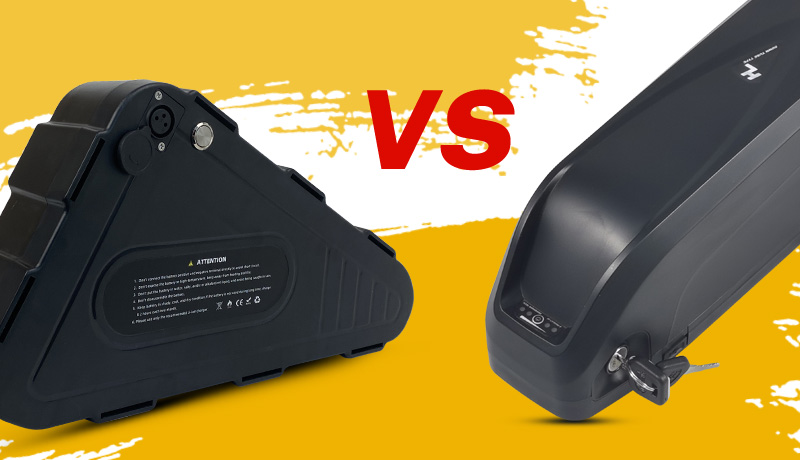
When custom building or upgrading an electric bike, the two most common battery form factors you will encounter are the Hailong (Shark) case and the Triangle pack. A common question circulating in forums and Reddit threads is: "Which one is safer? Which one is less likely to catch fire?"
The conventional wisdom suggests that Hailong batteries are safer because they look more like a finished consumer product, while Triangle packs—often wrapped in blue shrink wrap and stuffed into a fabric bag—look like DIY experiments.
This assumption is dangerous.
The reality is that the shape of the battery has very little to do with its chemical stability. Whether you choose a Triangle or a Hailong, the risk of fire is determined by what is happening inside the casing. In this article, we will dissect the construction of both types to reveal the real determinants of safety: Cell quality, BMS architecture, welding materials, and assembly craftsmanship.
The Form Factor Difference: Hard Shell vs. Soft Pack
Before analyzing the internals, let's address the external differences, as they do play a minor role in physical safety.
The Hailong (Shark) Case
The Hailong is the standard downtube battery. It features a rigid polycarbonate (plastic) shell that locks onto a mounting plate.
- Pros: The hard shell offers excellent impact resistance. If the bike falls over, the plastic absorbs the shock, protecting the cells inside from crushing.
- Cons: Limited space means limited capacity (usually maxing out around 52V 17Ah with standard cells).
The Triangle Pack
These fit inside the frame triangle. While some rigid plastic triangle cases exist, the vast majority are "soft packs"—cells shrink-wrapped in PVC and placed inside a Velcro fabric bag.
- Pros: Massive range potential. You can fit large batteries (e.g., 72V 30Ah) that Hailong cases simply cannot accommodate.
- Cons: Vulnerability. A soft pack relies on the fabric bag and the frame tubes for protection. A sharp impact from the side (like a car door or a rock) could potentially deform the cells, causing an internal short circuit.
Key Takeaway: While the Hailong offers better mechanical protection against crashes, a fire caused by spontaneous thermal runaway is almost never about the case—it is about the engineering inside.
The Real Safety Factors: It’s What’s Inside That Counts
You can have a Hailong battery that is a ticking time bomb, and a Triangle pack that is virtually indestructible. Here are the technical components that actually determine fire risk.
1. The Cells (The Heart of the Fire)
The single biggest factor is the brand of the 18650 or 21700 Lithium-ion cells used.
- Tier 1 Cells (Samsung, LG, Panasonic/Sanyo, Sony/Murata): These are manufactured with strict quality control. They have consistent internal resistance (IR) and pressure relief valves that work correctly. They are highly unlikely to catch fire unless abused.
- Generic "Chinese" Cells: Often found in cheap batteries (regardless of shape). These may have inconsistent capacities. If one cell degrades faster than its neighbors, it acts as a resistor, generating massive heat during charging/discharging, leading to thermal runaway.
2. Advanced BMS Architecture
The Battery Management System (BMS) is the electronic brain. In cheap packs, the BMS is a basic cutoff switch. In high-quality packs, it is a sophisticated monitor.
Passive vs. Active Balancing
Most standard e-bike batteries use passive balancing. When charging, if one cell group reaches 4.2V before the others, the BMS "burns off" the excess energy from that high group as heat (using bleed resistors) to let the lower groups catch up.
The Safety Risk: If a BMS has weak bleed resistors or fails to sense a voltage drift accurately, one group can be severely overcharged (leading to fire) or over-discharged (leading to chemical instability). A "Smart BMS" (often Bluetooth-enabled) allows you to visualize this drift before it becomes a hazard.
Current Rating (C-Rating) Matching
Safety also relies on the BMS matching the controller's draw. If your controller pulls 40A but the BMS is rated for 30A continuous, the MOSFETs inside the BMS can overheat and fail, potentially fusing shut (which means protection is lost).
3. Current Handling: Nickel Strips and Welding
This is where "garage-built" packs often fail. To connect the cells, manufacturers use metal strips.
- Pure Nickel vs. Nickel-Plated Steel: Pure nickel has low resistance. Cheap packs use nickel-plated steel, which has higher resistance. When you pull high amps (current), steel strips heat up like a toaster wire, melting the plastic cell wrappers and causing a short.
- Spot Welding Quality: Weak welds increase resistance (heat). Aggressive welds can puncture the cell cap. Professional assembly uses CNC spot welders for perfect pressure and duration.
4. Insulation and Separation
Inside the pack, the positive and negative terminals are millimeters apart. Robust safety requires:
- Barley Paper / Fish Paper: An insulating ring must be placed on the positive terminal of every cell.
- Cell Holders: Plastic honeycombs (brackets) keep cells physically separated so they don't rub against each other and wear through the shrink wrap.
- Kapton Tape & Fiberglass Board: Used to insulate the BMS from the cells and separate cell groups.
Note: Cheap Triangle packs often skip the plastic cell holders to save space, gluing cells together instead. This is less safe than using proper brackets, which are standard in Hailong cases.
Wiring, Waterproofing, and Craftsmanship
Finally, we look at the assembly finishing touches.
Wire Gauge and Connectors
Whether Triangle or Hailong, the discharge wires must be appropriate for the amperage (e.g., 10AWG or 12AWG silicone wire). Undersized wires will melt. Similarly, using cheap imitation Amass XT60/XT90 connectors can lead to resistance heating at the connection point.
The Element of Water
Water ingress is a major cause of BMS corrosion and short circuits.
- Hailong: Generally water-resistant, but not waterproof. The plastic seams can leak. High-quality builders add extra sealant around the seams and base.
- Triangle (Soft Pack): Ironically, these can be more waterproof if built well. A high-end Triangle pack uses a blue fire-retardant PVC shrink wrap, but the critical layer is the sealant. Top-tier builders use neutral-cure silicone around the wire exits and wrap the entire assembly in specialized waterproof tape before it even goes into the fabric bag.
Buying Checklist: How to Ensure Safety
Before you click "Buy," verify these 5 points with the seller. If they cannot answer, look elsewhere.
- Cell Brand Verification: Do not accept "Generic" or "High Power Cells." Look for specific model numbers like Samsung 35E, LG MJ1, or Panasonic GA.
- Cell Holders (For Triangle Packs): Ask if the pack is built using plastic honeycomb holders or if the cells are just glued together. Always prefer holders for vibration resistance and cooling.
- Strip Material: Confirm they use Pure Nickel strips, not nickel-plated steel. This is critical for currents over 20A.
- Connector Brand: Are the connectors genuine Amass XT60/90, or cheap knockoffs? (Genuine ones have "Amass" molded into the plastic).
- Smart BMS Option: For high-capacity batteries, pay extra for a Bluetooth Smart BMS. The ability to check cell voltages on your phone is the best early warning system against fire.
Conclusion
The question isn't "Triangle vs. Hailong," it is "Quality vs. Cheap."
However, if we assume equal build quality (same cells, same BMS, same builder):
- Choose Hailong if: You want mechanical protection, ease of removal, and aesthetic integration. It is safer against physical impact.
- Choose Triangle if: You need high power/range. However, ensure you buy from a reputable builder who uses plastic cell holders (honeycomb) inside the soft pack to prevent internal friction shorts.
The Golden Rule: Never buy a battery without knowing exactly what cells and BMS are inside. The "Black Box" is the dangerous one.
Need a Battery Built for All-Weather Performance?
ShunTongDa Battery packs feature advanced BMS with integrated thermal protection that strictly limits charging and discharge outside of safe temperature parameters. Our cold-weather performance is engineered to minimize resistance effects. Ride year-round with confidence, powered by ShunTongDa Battery.