Why Did My Electric Scooter Suddenly Lose Power and Stop Moving? A Quick Troubleshooting Guide
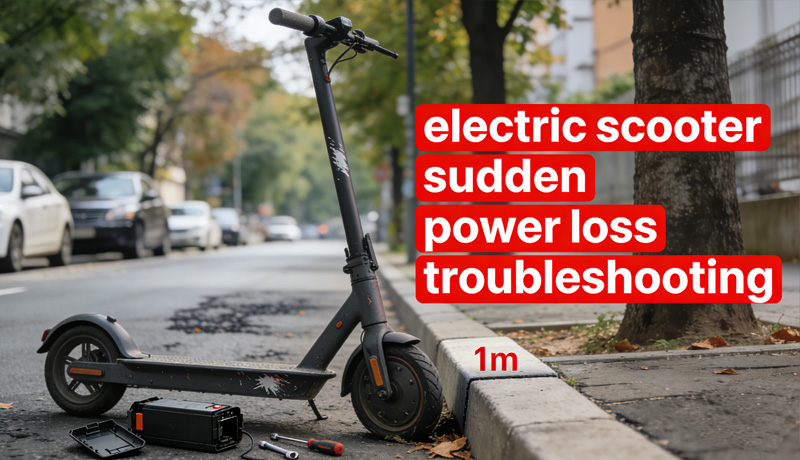
There's nothing more frustrating than gliding along on your electric scooter (e-scooter) only to experience a sudden, complete power cut—leaving you stranded on the road or sidewalk. Whether you're commuting to work, running errands, or out for a casual ride, an unexpected electric scooter sudden power loss not only disrupts your schedule but also poses safety risks. The good news is that most sudden e-scooter power issues, from battery malfunctions to wiring problems, can be diagnosed and resolved with a systematic, step-by-step troubleshooting process—no advanced mechanical skills are needed. In this guide, we'll break down the most common causes of e-scooter power failure, walk you through practical fixes for issues like loose wiring or BMS glitches, and share expert tips to prevent future problems. These insights are designed to help riders around the world find reliable solutions for electric scooter not moving after shutdown when they need them most.
Pre-Troubleshooting Safety Precautions
Before beginning troubleshooting, prioritize safety to avoid electrical shocks, component damage, or personal injury—a critical step often overlooked by riders. First, turn off your e-scooter's power switch and disconnect the battery (if removable) to cut off all electrical current. Wear insulated gloves to protect against accidental shocks, especially when handling wires or connectors. Work in a dry, well-ventilated area; moisture can worsen electrical issues and increase the risk of shock. Avoid using uninsulated metal tools, as they can cause short circuits in components. Finally, place the e-scooter on a stable surface (such as a workbench or flat ground) to prevent it from tipping over during inspection. These precautions apply to all electric scooter models, from affordable commuter scooters to high-performance off-road ones, making them essential for riders worldwide.
Step-by-Step Troubleshooting: From Simple to Complex
When troubleshooting e-scooter power loss, always start with the simplest, most common causes before moving on to more complex components. This approach saves time, reduces the risk of unnecessary part replacements, and aligns with how both DIY riders and professionals diagnose issues—making this guide actionable for all audiences.
1. Check the Battery: The Most Common Culprit
The battery is the heart of your electric scooter, and battery-related issues are the top cause of sudden power cuts. Start by checking the battery's charge level: even if you think it's charged, a faulty battery or charger may have prevented it from charging properly. Connect the scooter to its original charger and check if the charger's indicator light turns on (a red light typically means it's charging, while a green light indicates a full charge). If the light does not illuminate, the charger may be faulty—try a compatible replacement charger (ensure it matches the battery's voltage, e.g., 36V or 48V) to rule out charger problems.
Next, inspect the battery connections. Over time, vibrations from riding can loosen the battery's plug or terminals. If the battery is removable, disconnect it and check the plug and socket for dirt, corrosion, or bent pins—these can interrupt electrical flow. Clean the connections with a dry cloth or small brush (avoid water) and reinsert the battery firmly. If the battery is non-removable, refer to your scooter's user manual to locate the internal connections and check for looseness.
Most e-scooter batteries are equipped with a Battery Management System (BMS) to protect against overcharging, over-discharging, and short circuits. If the battery is over-discharged (e.g., you rode it until it completely died) or overheated, the BMS may trigger a safety shutdown, cutting power to the scooter. To reset the BMS, disconnect the battery for 5–10 minutes, then reconnect it and turn on the scooter. If this works, the issue was likely a temporary BMS activation—avoid over-discharging the battery in the future to prevent recurrence.
If the battery is old (used regularly for 3+ years) or has been damaged (e.g., dropped, exposed to extreme temperatures), it may have degraded and can no longer hold a charge or deliver consistent power. Look for signs of battery damage: swelling, leakage, or a burning odor. A swollen or leaking battery is dangerous and should be replaced immediately—do not attempt to repair it. For riders worldwide, ensure you purchase a replacement battery that is compatible with your scooter model and meets local safety standards (e.g., CE, UL).
2. Inspect Fuses and Circuit Breakers
E-scooters use fuses or circuit breakers to protect the electrical system from short circuits and overcurrent. A blown fuse or tripped circuit breaker is another common cause of sudden power loss. Use your user manual to locate the fuse box (usually near the battery or controller)—fuses are small, cylindrical components with a metal filament inside. Check if the filament is broken; if so, replace the fuse with one of the same amperage (never use a higher amperage fuse, as this can damage components).
Circuit breakers are reusable and may trip due to overcurrent (e.g., riding uphill with a heavy load or a short circuit). To reset a tripped circuit breaker, locate the switch (often on the battery or controller) and flip it back to the "on" position. If the circuit breaker trips again immediately, there may be a short circuit in the wiring or a faulty component—proceed to the next step.
3. Examine Wiring and Connections
Loose, damaged, or frayed wires can cause intermittent or complete power loss. Begin by visually inspecting the wiring harness (the bundle of wires connecting the battery, controller, motor, and other components) for signs of damage: fraying, cuts, or exposed wires. Pay close attention to areas where wires bend or rub against the scooter's frame (e.g., near the handlebars, wheels, or battery compartment)—these are common spots for wear and tear.
Check all connectors along the wiring harness: ensure they are fully plugged in and free of dirt, corrosion, or bent pins. If a connector is loose, push it firmly into place; if it is corroded, clean it with a contact cleaner (available at auto or electronics stores). Avoid pulling on the wires themselves—this can damage the connections or break the wires.
A short circuit occurs when two exposed wires touch, causing a surge in current that triggers the fuse or BMS. If you find exposed wires, wrap them with electrical tape to insulate them, or replace the damaged section of wire. If you are not comfortable working with wiring, consult a professional—incorrect repairs can lead to further damage or safety hazards. This step is crucial for all e-scooter models, as wiring issues are not model-specific and affect riders worldwide equally.
4. Test the Controller
The controller acts as the "brain" of the e-scooter, regulating power flow from the battery to the motor. A faulty controller can cause sudden power loss, an unresponsive throttle, or erratic performance. To check the controller, first ensure it is properly connected to the battery, motor, and throttle—loose connections here are a common issue.
Look for signs of controller damage: overheating (the controller may feel hot to the touch), burning smells, or visible damage to the circuit board. If the controller is overheating, it may have a thermal shutdown feature that cuts power to prevent damage—allow it to cool down, then check if the scooter works. If the issue persists, the controller is likely faulty and needs to be replaced.
Testing the controller requires a multimeter (a tool used to measure voltage and current), which is a valuable investment for DIY troubleshooting. Set the multimeter to measure DC voltage, then connect the probes to the controller's battery terminals—the reading should match the battery's voltage (e.g., 36V or 48V). If there is no voltage reading, the controller may be faulty. For riders without a multimeter, take the scooter to a professional for testing—this ensures accurate diagnosis and avoids unnecessary part replacements.
5. Check the Motor
A faulty motor can cause the e-scooter to lose power or stop moving entirely, even if the battery and controller are working. Start by inspecting the motor connections: ensure the wires connecting the motor to the controller are secure and undamaged. Loose motor connections are a common issue, especially after rough riding.
Check the motor for physical damage: cracks, dents, or debris stuck in the rotor (the rotating part of the motor). Debris can prevent the motor from spinning, causing the controller to cut power. Clean the motor with a dry cloth and remove any debris—avoid using water, as this can damage the motor's internal components.
If the motor makes unusual noises (e.g., grinding, clicking) before or during the power cut, it may have internal damage (e.g., worn bearings, a faulty stator). A motor with internal damage will likely need to be replaced, as repairs are often expensive and require specialized tools. For riders worldwide, ensure you purchase a motor that is compatible with your scooter's voltage and power rating.
6. Inspect Sensors and Switches
E-scooters are equipped with several sensors and switches that can cause power loss if they malfunction. The most common ones are the throttle sensor, brake sensor, and side stand sensor (on some models).
The throttle sensor tells the controller how much power to send to the motor—if it malfunctions, the controller may not receive a signal, causing the scooter to lose power. To test the throttle, turn on the scooter and gently twist the throttle—if there is no response, the throttle sensor may be faulty. Check the throttle's connections and wiring; if they are secure, the throttle may need to be replaced.
The brake sensor is designed to cut power to the motor when the brakes are applied—if it is stuck or malfunctioning, it may incorrectly detect that the brakes are always applied, preventing the scooter from moving. Inspect the brake sensor (located near the brake lever or caliper) for loose connections or damage. Disconnect the brake sensor and turn on the scooter—if the scooter works, the sensor is faulty and needs to be replaced.
Some e-scooters have a side stand sensor that cuts power when the side stand is down (for safety). If the sensor is stuck, it may prevent the scooter from moving even when the side stand is up. Inspect the sensor and ensure it is functioning properly—if not, clean or replace it.
Common Power Loss Scenarios and Quick Fixes
To simplify troubleshooting, we've compiled common scenarios riders face, along with quick fixes—this section directly addresses users' specific pain points, helping you resolve issues more quickly.
Scenario 1: The scooter cuts out while riding uphill or with a heavy load. Fix: This is often caused by overcurrent triggering the circuit breaker or BMS. Reduce the load, avoid steep hills, or reset the circuit breaker/BMS. If the issue recurs, check the battery and controller for degradation.
Scenario 2: The scooter shuts down and will not turn on. Fix: Check the battery charge and connections, replace the fuse if it is blown, or reset the BMS. If the battery is swollen or leaking, replace it immediately.
Scenario 3: The scooter loses power intermittently. Fix: Inspect for loose wiring or connectors, especially those connected to the battery and controller. Clean corroded connections and replace damaged wires.
When to Seek Professional Help
While most power loss issues can be resolved with DIY troubleshooting, some require professional expertise. Seek professional help if: you find internal damage to the controller or motor, the battery is swollen or leaking, you cannot identify the issue with a multimeter, or the scooter still does not work after attempting all troubleshooting steps. Professional technicians have specialized tools and experience to diagnose complex issues, ensuring safe and effective repairs. For riders worldwide, look for authorized service centers or reputable e-scooter repair shops that meet local safety standards.
Preventive Tips to Avoid Future Power Loss
Prevention is better than cure—follow these tips to reduce the risk of sudden power cuts. Keep the battery charged (avoid over-discharging it), store the scooter in a dry, temperature-controlled area (extreme heat or cold damages batteries), regularly inspect wiring and connections, clean the scooter to remove dirt and debris, and avoid rough riding (which loosens components). Regular maintenance (e.g., checking fuses, lubricating moving parts) will extend your e-scooter's lifespan and minimize electrical issues.
Conclusion
Sudden power loss in an electric scooter is a common frustration, but with a systematic troubleshooting approach, you can quickly identify and resolve most issues—saving time and money. By starting with the battery (the top culprit for e-scooter power failure) and simple connections, then moving on to more complex components like the controller and motor, you'll cover all potential causes of electric scooter sudden power loss. Remember to prioritize safety, use the right tools, and seek professional help when necessary for issues like controller failure or motor power loss. This guide is designed to help riders around the world resolve e-scooter not moving after shutdown efficiently, whether you're a daily commuter or a casual rider. By following these steps and preventive tips, you can keep your e-scooter running smoothly and avoid being stranded on the road.
Key troubleshooting terms to remember: electric scooter sudden power loss, e-scooter power failure fix, electric scooter not moving after shutdown, how to reset e-scooter BMS, e-scooter controller failure symptoms, electric scooter loose wiring repair, 36V 48V e-scooter power cut, DIY e-scooter power repair.