How to Build a Manned Drone Power System: Lithium Battery Applications & Optimization
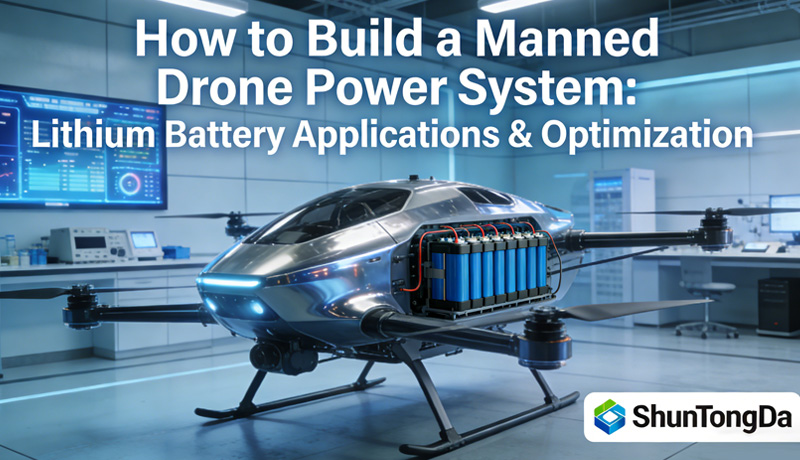
The global manned drone market is expanding rapidly, with applications spanning emergency rescue, aerial tourism, and industrial logistics. At the core of every reliable manned drone power system lies a robust energy solution—one responsible for lifting payloads (including human passengers), ensuring stable flight, and extending endurance. Among all power sources, lithium battery for manned drones have emerged as the dominant choice, thanks to their high energy density, lightweight design, and rapid discharge capabilities. This guide breaks down the step-by-step process of building a manned UAV power system, focuses on lithium battery for manned drones selection and integration, and shares actionable insights to help engineers, developers, and industry professionals create efficient, safe, and reliable power solutions.
1. Core Components of a Manned Drone Power System
A manned drone power system is a synergistic assembly of propulsion, energy storage, and control components. Unlike consumer drones, manned models require redundant design and high load-bearing capacity to prioritize safety. The key components include the following:
1.1 Propulsion System
The propulsion system converts electrical energy into mechanical thrust, the foundation for lifting the drone and its passengers. Brushless DC motors (BLDC) are the industry standard for manned drone power system, offering higher efficiency (up to 95%) and longer service life compared to brushed motors. The number and power of motors depend on the drone’s maximum take-off mass (MTOW)—for a mid-heavy manned drone weighing 15–35kg, 6–8 motors with 5–20 horsepower each are typically required to ensure stable flight and emergency redundancy. Propellers must be optimized for heavy-duty performance, with their diameter and pitch matched to motor power to minimize vibration and maximize thrust efficiency.
1.2 Power Distribution & Control System
Electronic Speed Controllers (ESCs) regulate motor speed by adjusting power input, a function crucial to maneuverability and flight stability. A high-quality ESC should support rapid current response and withstand peak loads during takeoff—critical for manned UAV power system reliability. The Power Distribution Board (PDB) distributes battery power evenly to motors, ESCs, flight controllers, and onboard electronics while protecting the system from power surges. The Battery Management System (BMS) is essential for lithium battery for manned drones safety—it monitors voltage, current, and temperature, guards against overcharging and over-discharging, and extends battery service life.
1.3 Energy Storage System
The energy storage system directly determines flight endurance and payload capacity—two make-or-break factors for manned drone power system. For manned drones, lithium battery for manned drones are preferred over lead-acid or nickel-cadmium batteries due to their superior energy density (150–265 Wh/kg) and lightweight properties. Hybrid systems—combining high energy density lithium battery with internal combustion engines or hydrogen fuel cells—are also gaining traction, as they can extend endurance by 30% or more compared to pure battery systems.
2. Lithium Battery Selection & Application for Manned Drones
Choosing the right lithium battery for manned drones is critical to the performance and safety of a manned drone power system. Four main lithium battery chemistries are used in manned drones, each with unique advantages and use cases—many of which align with ShunTongDa customized drone lithium battery solutions:
2.1 Lithium Polymer (LiPo) Batteries
LiPo batteries are the most common choice for high-performance manned drone power system, owing to their high discharge rate (up to 20C or higher) and flexible packaging, which allows them to be molded to fit compact drone designs. They offer a moderate cycle life (300–500 charge cycles) and energy density (150–200 Wh/kg), making them ideal for high-performance manned drones that require rapid power delivery, such as racing or emergency rescue models. However, LiPo batteries are prone to thermal runaway if damaged, requiring strict thermal management—an area where ShunTongDa’s safe lithium battery solutions excel.
2.2 Lithium-Ion (Li-Ion) Batteries
Li-Ion batteries offer higher energy density (200–265 Wh/kg) than LiPo batteries and a longer cycle life (500–1000 charge cycles)—key advantages for long endurance lithium battery for manned drones. They have a lower discharge rate, making them suitable for long-endurance missions such as aerial surveillance or logistics delivery. For example, ShunTongDa’s customized 14S Li-Ion battery (similar to the mPower 14S 12600mAh model) boasts a nominal voltage of 50.4V, a discharge rate of 11C, and a lightweight design—ideal for surveillance drones requiring extended flight time. High-capacity Li-Ion packs (e.g., 20000mAh 50.4V) can provide 1008 Wh per battery, supporting prolonged flight for manned platforms.
2.3 Lithium Iron Phosphate (LiFePO4) Batteries
LiFePO4 batteries excel in safety and durability, with no risk of thermal runaway and a cycle life exceeding 2000 charge cycles—making them a top choice for safe lithium battery for passenger-carrying drones. They are ideal for industrial and heavy-duty manned drones, such as those used for power line inspection or agricultural spraying. While their energy density (100–150 Wh/kg) is lower than that of LiPo and Li-Ion counterparts, their enhanced safety aligns with ShunTongDa’s focus on reliable drone power solutions for safety-critical applications.
2.4 Lithium Titanate (LTO) Batteries
LTO batteries are a niche option for specialized manned drones, offering ultra-fast charging capabilities (fully rechargeable in minutes) and extreme temperature tolerance (-30°C to 60°C). They have an exceptionally long cycle life (over 3000 charge cycles) but lower energy density (80–120 Wh/kg), making them suitable for missions requiring rapid turnaround, such as emergency medical delivery in remote areas. ShunTongDa’s customized drone lithium battery service can tailor LTO solutions for such specialized use cases.
2.5 Key Selection Criteria
When selecting lithium battery for manned drones, prioritize three factors: energy density (a key factor influencing endurance), discharge rate (which must align with motor power requirements), and safety (compliance with industry standards like EU’s CE or USA’s FCC). For example, a manned drone with a 20kg MTOW requires a battery pack with at least 5kWh of energy capacity and a continuous discharge rate of 100A or higher—specifications ShunTongDa’s customized drone batteries can easily meet. Additionally, consider cell configuration (e.g., 14s4p) to achieve the required voltage and capacity—14s configurations (with a nominal voltage of 50.4V) are common for mid-heavy manned drones.
3. Key Challenges & Optimization Strategies for Power System Building
Building a manned drone power system presents three primary challenges: limited endurance, battery safety risks, and system incompatibility. Below are actionable optimization strategies, with insights into how ShunTongDa’s customized drone power solutions address these pain points:
3.1 Endurance Optimization
Pure lithium battery systems often suffer from limited flight time (typically 20–60 minutes for manned drones). To address this issue, adopt hybrid power systems—combining high energy density lithium battery with hydrogen fuel cells can quadruple the flight radius, enabling flights of more than 2 hours for humanitarian aid or large-scale surveillance missions. For pure battery systems, optimize battery energy density by selecting high-performance cells (e.g., Molicel INR 21700-P50B) and reducing weight through lightweight enclosures—ShunTongDa’s customized lithium battery packs are engineered to balance energy density and weight for maximum endurance.
3.2 Battery Safety Optimization
Thermal management is critical for lithium battery for manned drones—install heat sinks or cooling fans to maintain an operating temperature between 20–40°C. The BMS should include overcurrent, overvoltage, and short-circuit protection, and feature smart connectivity (CANbus, RS485) for real-time monitoring. Additionally, use redundant battery packs to ensure emergency power supply in the event of a single pack failure—a standard practice for passenger-carrying drones that ShunTongDa integrates into its customized solutions.
3.3 System Compatibility Optimization
Ensure all components—motors, ESCs, batteries, and PDB—are compatible in terms of voltage and current ratings. For example, a 48V power network is recommended for mid-heavy manned drones, as it balances efficiency and reliability—ShunTongDa’s 48V customized drone batteries are designed to integrate seamlessly with industry-standard 48V power networks, reducing compatibility risks. Conduct fatigue testing (with a minimum of 100,000 cycles) on transmission systems to avoid power loss due to wear and tear.
4. Conclusion & Future Trends
Building a reliable manned drone power system demands the careful integration of propulsion, control, and energy storage components—with lithium battery for manned drones serving as the cornerstone of modern designs. By selecting the right battery chemistry, optimizing system compatibility, and prioritizing safety, engineers can create power systems that balance performance, endurance, and reliability. ShunTongDa’s customized drone lithium battery solutions are tailored to meet these needs, with successful cases across aerial tourism, emergency rescue, and industrial manned drones. The future of manned drone power systems will see greater adoption of hybrid energy solutions (lithium + hydrogen fuel cells) and advanced BMS technology, enabling longer flights and broader commercial applications. For industry professionals, partnering with a trusted manufacturer like ShunTongDa for customized lithium battery solutions is key to developing market-ready power systems.
FAQ
Q1: What is the best lithium battery type for a manned drone?
A1: It depends on the use case: LiPo batteries are ideal for high-performance manned drone power system, Li-Ion for long-endurance missions, LiFePO4 for safety-critical scenarios, and LTO for rapid-turnaround tasks. ShunTongDa’s customized drone batteries cover all these chemistries.
Q2: How long can a lithium-powered manned drone fly?
A2: Pure lithium battery for manned drones systems typically provide 20–60 minutes of flight time; hybrid systems can extend this to more than 2 hours. ShunTongDa’s high energy density lithium battery options maximize flight endurance for pure battery systems.
Q3: What safety measures are required for lithium batteries in manned drones?
A3: Deploy a smart BMS, install thermal management systems, and adopt redundant battery packs to prevent failures—all standard features in ShunTongDa’s customized drone lithium battery solutions.
Q4: Can ShunTongDa batteries be customized for drones?
A4: Yes, ShunTongDa is a professional battery solution manufacturer specializing in manned UAV lithium battery customization, capable of meeting all your requirements with successful drone battery cases. For more details, please contact us.