Is It Better to Charge E-Bike Battery to 80% or 100%?
The difference between topping off your battery every night and stopping short can mean the difference between replacing your pack in two years or keeping it healthy for five. We explore the science behind the "80% Rule."
This is arguably the most common question asked by owners seeking to maximize the longevity of their investment. The simple answer is:
For daily use and long-term health, it is significantly better to charge your e-bike battery to 80-90%.
While charging to 100% provides maximum range for long trips, doing so daily subjects the battery to Voltage Stress, the primary chemical accelerator of degradation in Lithium-ion cells.
The Science of Voltage Stress (The Rubber Band Analogy)
Lithium-ion cells operate within a safe voltage range. For a standard cell, this range is typically between 3.0 Volts (empty) and 4.2 Volts (full).
1. The High-Stress Zone (4.0V to 4.2V)
The voltage of a Lithium-ion cell increases exponentially as it approaches full capacity. The jump from 80% to 100% requires the voltage to rise from approximately 4.0 Volts to 4.2 Volts. This high-voltage state is chemically taxing on the cell structure.
We use the "Rubber Band Analogy": Keeping the cell at 4.2V is like keeping a rubber band stretched to its absolute limit. Over time, the material fatigues and breaks down. Chemically, this high potential accelerates the oxidation of the electrolyte and the cathode material, leading to the irreversible formation of compounds that consume the battery's active lithium. This process is called capacity fade.
2. The Low-Stress Zone (3.6V to 4.0V)
Charging only to 80% or 90% means the cell voltage only reaches around 4.0 Volts. This is the battery’s comfort zone—it provides substantial capacity while maintaining minimal chemical tension. This is why batteries stored at a medium charge level (around 60%) last much longer.
Cycle Life: The True Metric of Longevity
Cycle life is the total number of charge/discharge cycles a battery can endure before its capacity drops below 80% of its original rating. Charging to 80% instead of 100% has a dramatic, documented impact on this metric.
| Charge Range | Estimated Cycles Achieved | Capacity Retention Risk |
|---|---|---|
| 20% to 100% (Full Range) | 300 - 500 cycles | High Chemical Stress |
| 20% to 80% (Optimal Range) | 800 - 1,200 cycles | Low Chemical Stress |
By staying within the 20% to 80% window, you significantly reduce the time the cells spend in the high-stress zone, effectively extending the cycle life of your pack by two to three times.
Practical Application: When to Break the 80% Rule
While the 80% rule is optimal for daily battery health, your e-bike is meant to be ridden. It is perfectly acceptable—and necessary—to charge to 100% when your commute or planned trip demands maximum range.
When to Charge to 100%:
- Long Rides: Charge to 100% only if you know you will immediately use that extra 10-20% capacity.
- Monthly Balance: It is generally recommended to fully charge the battery to 100% once every month or two. This allows the Battery Management System (BMS) to perform a top-end balance, ensuring all individual cell groups are equalized, which is crucial for long-term safety and performance.
How to Achieve the 80% Charge
Since most e-bike chargers are designed to charge to 100% (4.2V per cell), you need a strategy to stop early:
- Use a Smart Charger: The ideal solution is a dedicated charger with a charge-level selector switch that can be manually set to 80% or 90%.
- Use a Smart Plug/Timer: Plug your charger into a programmable smart plug. Note your battery capacity and charger output (e.g., 5Ah capacity at 2A output takes 2.5 hours to fully charge). Calculate the time needed to reach 80% and set the timer accordingly.
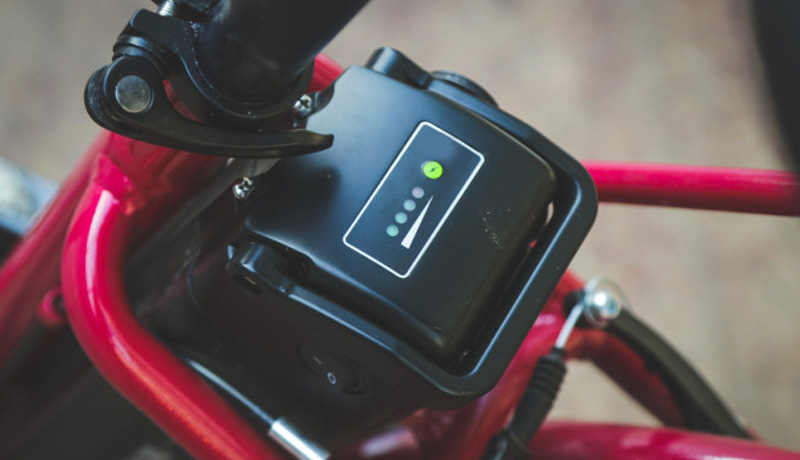
- Monitor Manually: Simply monitor the charge level on your display and manually unplug the battery when it hits the desired percentage.
Our Final Verdict
If your daily ride only consumes 30% of your battery's charge, aim to keep your pack between 40% and 80%. This small effort yields a massive return in years of reliable service from your battery.