How to Build an 8S10P LiFePO4 Battery Pack for Machine Control Power Supply: A Comprehensive Guide
In the industrial and manufacturing landscape, the reliability of machine control power supply directly impacts operational efficiency, downtime, and overall productivity. For engineers, maintenance professionals, and DIY enthusiasts alike, finding a power solution that balances safety, durability, and performance is critical—and the 8S10P LiFePO4 battery pack stands out as a industry-leading choice. This in-depth blog post will walk you through the step-by-step process of building an 8S10P LiFePO4 battery pack tailored specifically for machine control applications, covering component selection, assembly best practices, performance testing, and the wide-ranging applications of LiFePO4 battery technology. [Insert Your Build Video Here] — the embedded video complements this guide with visual demonstrations, making even complex assembly steps easy to follow for both seasoned technicians and those new to LiFePO4 battery construction.
Why the 8S10P LiFePO4 Configuration Is Ideal for Machine Control Power
Before diving into the build process, it’s important to understand why the 8S10P LiFePO4 battery configuration is the preferred choice for machine control power systems. LiFePO4 (lithium iron phosphate) batteries are celebrated for their superior safety and longevity, two attributes that are non-negotiable in industrial settings. Unlike other lithium-ion chemistries, LiFePO4 batteries eliminate the risk of thermal runaway, explosion, or fire—even when subjected to overcharging, short-circuiting, or extreme temperature conditions. This makes them ideal for use in close proximity to sensitive machine control equipment.
The 8S series configuration of the LiFePO4 battery delivers a nominal voltage of 29.6V (33.6V at full charge), which aligns perfectly with the voltage requirements of most industrial machine control modules, PLCs (Programmable Logic Controllers), CNC machines, and automated control systems. The 10P parallel configuration, meanwhile, enhances the 8S10P LiFePO4 battery pack’s capacity and discharge current, ensuring consistent power delivery even during peak load operations—such as when multiple control components are running simultaneously. When compared to traditional lead-acid batteries, the 8S10P LiFePO4 battery pack offers a longer lifespan (2-3 times that of lead-acid), lighter weight (50% lighter), faster charging, and zero maintenance requirements—making it a cost-effective and reliable long-term solution.
Essential Components for Building an 8S10P LiFePO4 Battery Pack
The quality of your 8S10P LiFePO4 battery pack depends entirely on the components you select. To ensure industrial-grade performance and safety, we recommend using high-quality, compatible parts. Below is a detailed breakdown of the components required for the build, along with key considerations for each:
-
LiFePO4 Cells: You will need 80 high-quality 18650 or 21700 LiFePO4 cells (3.2V nominal voltage, 1500mAh+ capacity per cell). These cells are the core of your 8S10P LiFePO4 battery pack, so it’s critical to use grade A cells from reputable manufacturers. Consistent voltage, capacity, and internal resistance across all cells are essential—aim for a voltage variance of ≤ 0.05V between cells to prevent imbalances that can reduce the 8S10P LiFePO4 battery’s performance and lifespan. Grade A LiFePO4 cells typically offer 2000+ charge-discharge cycles, ensuring long-term reliability.
-
8S BMS (Battery Management System): A 8S LiFePO4 BMS with a minimum continuous discharge current of 30A (60A peak current) is non-negotiable for protecting your 8S10P LiFePO4 battery pack. The BMS safeguards against overcharging, overdischarging, overcurrent, and short-circuits—all of which can damage the LiFePO4 cells or the machine control equipment. Look for a BMS with a built-in balancing function, which ensures uniform charging and discharging of all cells, extending the overall lifespan of the 8S10P LiFePO4 battery pack.
-
Nickel Strips: Use 0.15-0.2mm thick pure nickel strips for connecting LiFePO4 cells (avoid nickel-plated steel, as it has lower conductivity). Pure nickel offers superior thermal stability and conductivity, reducing the risk of overheating during high-current discharge—a critical consideration for machine control applications that demand consistent power.
-
Battery Enclosure: Choose a heat-resistant, flame-retardant plastic or aluminum enclosure sized to fit 80 LiFePO4 cells. The enclosure should include built-in ventilation to dissipate heat, as well as protection against physical damage, dust, and moisture—common hazards in industrial environments. A well-designed enclosure ensures the 8S10P LiFePO4 battery pack remains safe and reliable even in harsh conditions.
-
Connection Tools: A spot welder is preferred for industrial-grade 8S10P LiFePO4 battery builds, as it creates strong, low-resistance connections between LiFePO4 cells and nickel strips. If a spot welder is not available, a high-temperature soldering iron (600-700°F) can be used, but spot welding is recommended for optimal conductivity and durability.
-
Testing Equipment: A digital multimeter is essential for measuring LiFePO4 cell voltage, total 8S10P LiFePO4 battery pack voltage, and continuity. A battery tester will help verify capacity and discharge performance, while an oscilloscope (optional) can monitor voltage stability during load testing—ensuring the battery pack meets the demands of machine control systems.
-
Insulation Materials: Heat shrink tube (12-16mm diameter), insulating tape, and dielectric grease are critical for insulating connections, preventing short-circuits, and protecting against corrosion. Proper insulation is vital for the long-term reliability of the 8S10P LiFePO4 battery pack in industrial settings.
Step-by-Step Guide to Building an 8S10P LiFePO4 Battery Pack
Building an 8S10P LiFePO4 battery pack requires precision and adherence to industry best practices. The following step-by-step process, complemented by the embedded video [Insert Your Build Video Here], will guide you through each stage of assembly, from cell sorting to final testing:
1. Cell Sorting and Testing
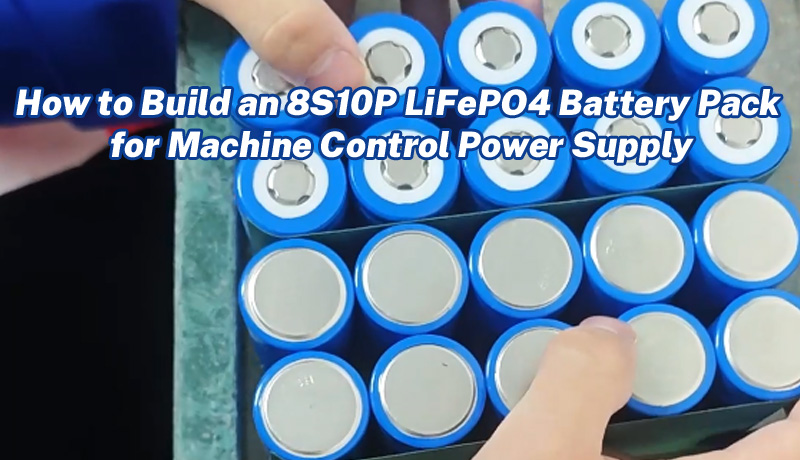
Start by testing all 80 LiFePO4 cells with a digital multimeter to ensure voltage consistency (variance ≤ 0.05V between cells). This is a critical step for building a reliable 8S10P LiFePO4 battery pack—cells with abnormal voltage, capacity, or internal resistance should be discarded. Even a single faulty cell can cause imbalances, reducing the battery pack’s performance and lifespan. Once sorted, group the cells into 8 sets of 10 (one set for each parallel group).
2. Parallel Group Assembly
Connect 10 LiFePO4 cells in parallel using pure nickel strips to form a single 10P parallel group. This step increases the capacity and discharge current of each group. Repeat this process 8 times to create 8 independent parallel groups. Ensure all connections are tight and secure—loose connections can cause overheating or voltage drops. Use the spot welder (or soldering iron) to attach the nickel strips to the cell terminals, taking care not to damage the cells.
3. Series Connection
Connect the 8 parallel groups in series (8S) to achieve the target nominal voltage of 29.6V. Strictly follow polarity guidelines—connect the positive terminal of one parallel group to the negative terminal of the next. Reverse connections can damage the LiFePO4 cells or BMS, so double-check each connection before proceeding. Use nickel strips to make the series connections, ensuring low resistance and thermal stability.
4. BMS Integration
Integrate the 8S LiFePO4 BMS with the 8S10P LiFePO4 battery pack. Connect the BMS to the battery pack’s positive and negative terminals, as well as to each parallel group for balancing and protection. Secure the BMS wiring with zip ties and insulate all connections with heat shrink tube or insulating tape to prevent short-circuits. Ensure the BMS is properly mounted in the enclosure to avoid damage.
5. Insulation and Enclosure
Wrap the entire 8S10P LiFePO4 battery pack in heat shrink tube or insulating tape to provide an extra layer of protection. Place the battery pack into the enclosure, ensuring it fits securely and that all ventilation holes are unobstructed—proper heat dissipation is critical for the battery’s performance and safety. Double-check all connections for tightness and insulation before closing the enclosure.
6. Performance Testing
Charge the 8S10P LiFePO4 battery pack to full capacity (33.6V) using a LiFePO4-compatible charger. Once charged, test the battery pack under load to verify voltage stability, discharge current, and BMS functionality. Use a multimeter to monitor voltage drop during peak load—this ensures the battery pack can deliver consistent power to machine control systems. If any issues are detected (e.g., voltage fluctuations, overheating), troubleshoot the connections or BMS before putting the battery pack into use.
Wide-Ranging Applications of LiFePO4 Batteries
While this guide focuses on the 8S10P LiFePO4 battery pack for machine control power, LiFePO4 battery technology has a diverse range of applications across various industries—thanks to its safety, long cycle life, and stable performance. Understanding these applications highlights the versatility and value of LiFePO4 batteries:
-
Industrial Sector: Beyond machine control power, LiFePO4 batteries are widely used in robotics, automated guided vehicles (AGVs), industrial UPS systems, and renewable energy storage (solar/wind power backup). Their durability and reliability make them ideal for harsh industrial environments.
-
Automotive Industry: LiFePO4 batteries are increasingly adopted in electric vehicles (EVs), hybrid electric vehicles (HEVs), and electric forklifts. Their safety profile and long lifespan address key concerns in automotive applications, while their lightweight design improves efficiency.
-
Consumer Electronics: Portable tools, camping equipment, and off-grid power systems rely on LiFePO4 batteries for their long runtime and low maintenance. They are also used in backup power solutions for homes and small businesses.
-
Medical Equipment: Portable medical devices such as monitors and defibrillators require reliable power, making LiFePO4 batteries a top choice. Their stability and safety ensure critical medical equipment operates when needed most.
-
Telecommunications: Cell towers and communication networks use LiFePO4 batteries for backup power, ensuring uninterrupted service during power outages. Their long cycle life reduces replacement costs and maintenance.
-
Marine Applications: Boat batteries and marine electronics benefit from LiFePO4 batteries’ resistance to moisture and corrosion, as well as their long lifespan in harsh marine environments.
Final Thoughts
Building an 8S10P LiFePO4 battery pack for machine control power supply is a practical, cost-effective solution that delivers superior performance and safety compared to traditional power sources. By following the steps outlined in this guide and using high-quality components, you can create a reliable battery pack that meets the demands of industrial machine control systems.
Whether you’re upgrading an existing machine control power supply or undertaking a new project, the 8S10P LiFePO4 battery pack offers a long-lasting, low-maintenance solution that will enhance operational efficiency and reduce downtime. For more insights into LiFePO4 battery technology, industrial power solutions, and DIY battery builds, subscribe to our blog and follow us for future guides.
FAQs (Frequently Asked Questions)
Q: Can I use different LiFePO4 cell sizes for the 8S10P build?
A: Yes, as long as the cells have the same nominal voltage (3.2V) and capacity. 18650 and 21700 cells are the most common, but other sizes can be used if they fit the enclosure and meet the capacity requirements.
Q: Do I need a spot welder, or can I solder the cells?
A: A spot welder is recommended for industrial-grade builds, as it creates stronger, lower-resistance connections. Soldering is possible but requires caution to avoid overheating the LiFePO4 cells.
Q: Can I customize my own 8S10P LiFePO4 battery pack?
A: Yes, you can. Please tell us your required parameters such as size, voltage, capacity, and maximum discharge current, and we will design a customized solution for you.