Short answer: Yes — as long as the voltage stays the same. Amp-hours are a fuel-tank size, not a pressure rating: a 48V 30Ah pack pushes exactly the same volts into the same controller as a 48V 10.4Ah pack, and the controller still decides how many amps the motor gets. What actually breaks bikes is a voltage mismatch, a charger built for the old pack, a BMS rated below what the controller asks for, or a case that no longer fits. Capacity itself is the safe dimension to increase.
1. What "higher capacity" actually changes
| Property |
Changes with more Ah? |
Why |
| Voltage |
No |
Set by cell count in series (13S = 48V nominal), not by Ah |
| Current the motor can draw |
No |
The controller sets the amp limit; the BMS only has to allow it |
| Top speed |
No |
Speed follows voltage and controller |
| Range |
Yes, nearly linearly |
Wh = V × Ah |
| Pack weight |
Yes |
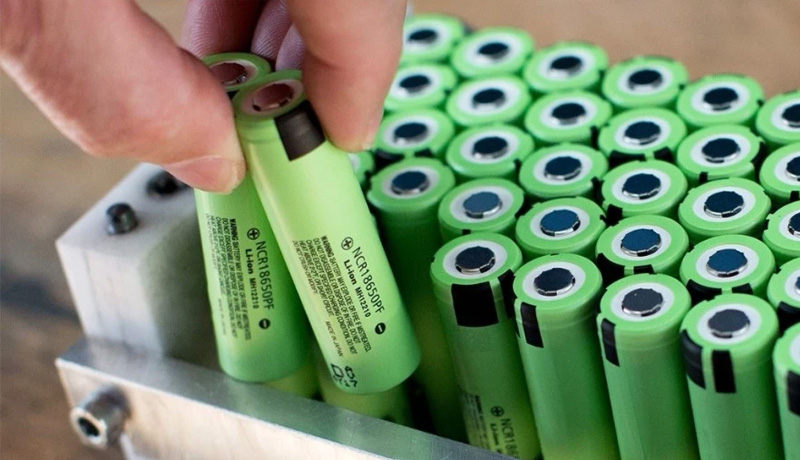
More cells in parallel |
| Charge time |
Yes |
Same charger, bigger tank |
| Case dimensions |
Often |
Extra parallel cells need volume |
So the question is not "will more Ah damage my motor" — it will not — but "does the bigger pack still match my bike's voltage, connector, cradle and charger".
2. The three locks that must match
Voltage, chemistry and physical fit are pass/fail. Capacity is the only free variable.
| Lock |
Rule |
What happens if it fails |
| Voltage |
48V pack → 48V system. 13S nominal 48V, charged to 54.6V |
A 52V (14S, 58.8V charged) pack on a 48V controller can exceed component ratings; a 36V pack simply will not run |
| Chemistry |
Li-ion pack → Li-ion charger |
A lead-acid or LiFePO4 charger has the wrong CV profile; overcharge or chronic undercharge |
| Connector + cradle |
Same pin count, same shape, case length fits |
It physically will not seat — a capacity upgrade cannot fix a mounting mismatch |
This is why a "bigger battery" is only an upgrade when it is sold as the same platform in a larger capacity, not as a different pack that happens to be cheaper per watt-hour.
3. Why more Ah does not burn out your motor
Power at the motor is volts × amps, and the controller caps the amps.
P = V × I (watts = volts × amps)
- A 48V system limited to 20A delivers 960W whether the pack is 10.4Ah or 30Ah.
- The 30Ah pack can sustain that 960W far longer, and suffers less voltage sag doing it — but it never forces extra current into the motor.
- What the pack must do is allow the current: a 30A BMS on a 20A controller is headroom; a 20A BMS on a 1000W build (20.8A at 48V) is a cut-out waiting to happen.
In other words: capacity buys duration and less sag, not more power. If you want more power, that is a voltage or controller change — a different (and less safe) project.
4. What really changes: weight, charge time, fit
Real packs from this store, same 48V platform:
| Pack |
Energy |
Wh/kg |
BMS |
Price |
Note |
| JD-HL085 48V 10.4Ah |
499 Wh |
143 |
20A |
$209.99 |
3.5 kg, 360×90×115 mm |
| JD-JB01 48V 14Ah |
672 Wh |
192 |
30A |
$277.95 |
3.5 kg, 380×95×89 mm |
| Rear rack 48V 17.5Ah |
840 Wh |
129 |
30A |
$359.99 |
6.5 kg, 430×158×85 mm |
Going from 499 Wh to 840 Wh is a 1.68× range gain. Note the weight column: the rack pack carries its extra energy at 129 Wh/kg, the downtube packs at 143–192 Wh/kg — so on a frame-mounted pack you get more range for less added mass.
Before ordering, measure twice: case length against your cradle, and socket width against your existing base. A 30Ah pack in the same shell family is usually longer.
5. Charge time: the number nobody checks
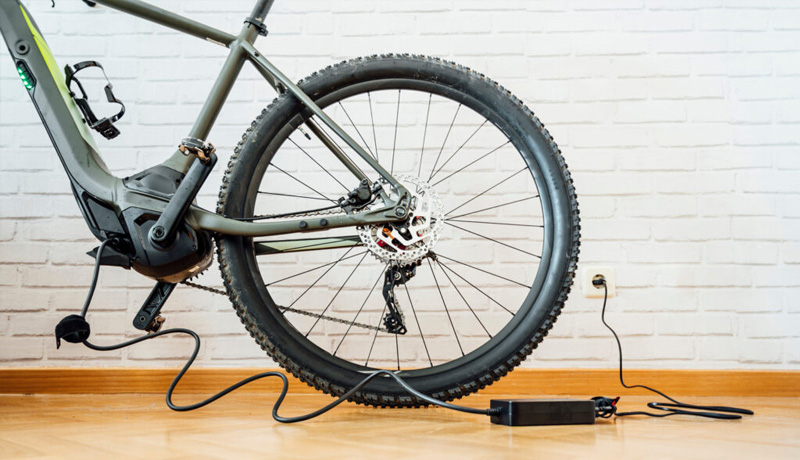
A bigger pack with the old charger is not unsafe — it is just slow. Charge time is:
t ≈ (Ah ÷ charger amps) × 1.2 (hours)
| Pack |
2A |
3A |
4A |
5A |
| 10.4Ah (499 Wh) |
6.2 h |
4.2 h |
3.1 h |
2.5 h |
| 14Ah (672 Wh) |
8.4 h |
5.6 h |
4.2 h |
3.4 h |
| 17.5Ah (840 Wh) |
10.5 h |
7.0 h |
5.3 h |
4.2 h |
| 30Ah (1,440 Wh) |
18.0 h |
12.0 h |
9.0 h |
7.2 h |
The 1.2 factor covers charging losses and the CV taper at the end. This is why a 30Ah pack paired with a 2A charger feels like it never finishes: overnight is no longer enough.
Charger rules that are not negotiable: the charger's output voltage must match the pack's full-charge voltage (54.6V for 48V, 58.8V for 52V, 42V for 36V), and the connector must match. A 48V charger on a 52V pack leaves it chronically undercharged; a 52V charger on a 48V pack overcharges it. Never "borrow" a charger because the plug fits.
6. When a capacity upgrade is genuinely unsafe
| Situation |
Why it is unsafe |
Do instead |
| Bigger pack, different voltage |
Controller and motor ratings exceeded |
Stay on the same voltage class |
| Bigger pack with a BMS below controller draw |
Repeated cut-outs under load, heat at the connector |
Size BMS ≥ motor watts ÷ volts |
| No-name cells, no pack certification |
Unknown cell quality is the actual fire risk, not the Ah figure |
Choose a pack with UL 2271 documentation (UL 2271 covers the pack; UL 2849 covers the complete e-bike electrical system) |
| Charging a 52V pack on a 48V charger (or vice versa) |
Wrong CV profile |
Match charger output to pack full-charge voltage |
| Pack physically larger than the cradle |
Vibration, partial contact, arcing |
Measure the case, or move to a rack format |
The one upgrade that is both safe and effective: same voltage, same connector family, higher Ah, BMS at or above the controller's amp limit, charger matched to the new pack's voltage.
FAQ
Q: Is it safe to put a higher capacity battery on my e-bike? A: Yes, provided the voltage is identical. Amp-hours describe stored energy, not pressure — a 48V 30Ah pack delivers the same voltage as a 48V 10.4Ah pack, and the controller still limits current. The unsafe changes are voltage, chemistry and charger mismatch, not capacity.
Q: Will a bigger battery make my e-bike faster? A: No. Speed follows voltage and the controller's speed limit. A larger pack mainly extends range and reduces voltage sag under load, which can make acceleration feel steadier but not quicker.
Q: Do I need a new charger for a bigger battery? A: Only if the voltage differs. A 48V pack charges on a 48V charger regardless of capacity — it just takes longer. Going from 10.4Ah to 30Ah on a 2A charger turns a 6-hour charge into roughly 18 hours, so a higher-amp charger is a convenience upgrade, not a requirement.
Q: Can a bigger battery damage my motor or controller? A: Not through capacity. The controller draws only what it is set to draw, so a 30Ah pack cannot push more amps than a 10.4Ah pack into the same 20A controller. Damage risk comes from voltage mismatch, a BMS rated below demand, or wiring that cannot carry the current.
Q: Will a bigger battery fit my bike? A: Only if the case does. Extra capacity usually means extra parallel cells and a longer shell — measure the case length and the socket width against your cradle before ordering, and check the pin count and shape match.
Q: Is a 30Ah battery too much for a 500W motor? A: No, it is simply more range. A 500W motor at 48V draws about 10.4A, so a 30A BMS is ample headroom. The pack will run cooler and sag less than a small pack doing the same work.
Q: What should I check before upgrading? A: Four things: the pack's nominal voltage matches your system, the connector and case match your cradle, the BMS rating covers motor watts ÷ volts, and the pack carries UL 2271 documentation. Then confirm your charger's output voltage matches the new pack.
Q: Does a bigger pack last longer in years? A: It can. A larger pack delivers the same trip at a lower depth of discharge, and shallow cycles are gentler on lithium cells — so a 30Ah pack used for a 20-mile commute typically sees fewer equivalent full cycles per year than a 10.4Ah pack doing the same route.
Sources and related reading
- JD-HL085 48V 10.4Ah pack — 499Wh, 20A BMS, 3.5kg, 360×90×115mm, $209.99, charger 54.6V 2A
- JD-JB01 48V 14Ah pack — 672Wh, 30A BMS, 3.5kg, $277.95
- Rear rack 48V 17.5–30Ah pack — 840Wh at 17.5Ah, 30A BMS, 6.5kg, $359.99
- Ebike Battery Ah Explained — the sizing method behind Section 1
- 36V vs 48V vs 52V E-Bike Batteries — why voltage classes are not interchangeable
- What BMS Should I Look For in an E-Bike Battery? — current-rating method
- Safety: UL Solutions battery safety testing and the CPSC Micromobility Information Center
Data note. This answers a question retrieved 8 times in the 30-question AI-visibility batch collected on 2026-10-16. The charge-time formula (Ah ÷ charger amps × 1.2) and the power identity (W = V × I) are recomputable for any pack; the capacities, weights, BMS ratings, dimensions and prices were read from the live product pages on 2026-10-26.