Small Civilian Unmanned Surface Vessels (USVs): Versatile Tools for Leisure, Fishing, Rescue & More
In recent years, small civilian USVs have emerged as game-changing tools for water enthusiasts, fishermen, coastal communities, and emergency responders. Unlike large commercial or military USVs, these compact, portable vessels—typically 1 to 3 meters in length—prioritize maneuverability, ease of use, and affordability, relying on high-capacity small USV lithium-ion batteries (no solar integration) to deliver reliable runtime for short-to-mid-range missions. Free from the complexity of solar power systems, they offer straightforward operation and maintenance, making them accessible to both hobbyists and professionals. This blog explores the diverse applications of small civilian USVs, from leisure activities like surfing and fishing to life-saving rescue operations, highlighting how these vessels are transforming water-based tasks with their flexibility and efficiency, powered by reliable civilian USV battery systems.
Leisure Applications: Elevating Water Sports & Recreation
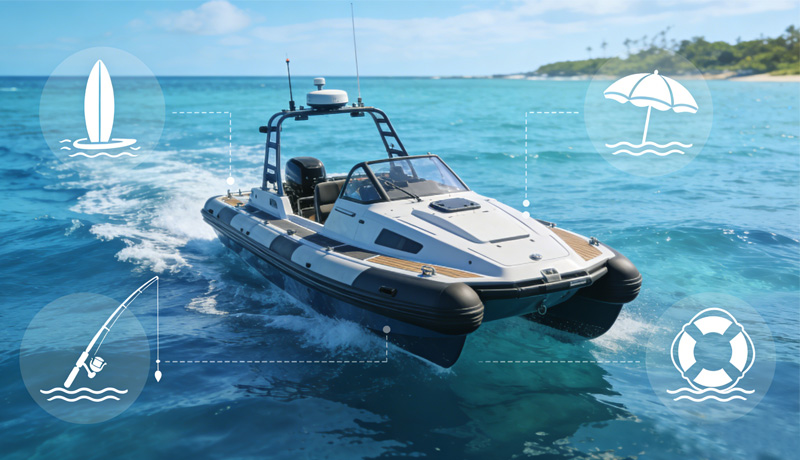
Small civilian USVs have redefined recreational water activities, offering new ways to enjoy lakes, rivers, and coastal waters while enhancing safety and convenience. Two of the most popular leisure use cases for these vessels—equipped with durable civilian USV battery systems—include:
1. Surfing Assistance & Wave Scouting
For surfers, small USVs act as intelligent "wave scouts" and safety companions, eliminating the need to paddle long distances to assess conditions. Equipped with high-definition cameras and GPS, these vessels can navigate offshore to map wave patterns, identify optimal surf spots, and transmit real-time footage back to a smartphone or tablet on the beach. Some models feature tow ropes, allowing them to pull surfers into position for perfect waves—ideal for beginners or those looking to conserve energy. Powered by lightweight small USV lithium-ion batteries, they deliver 4-8 hours of runtime, covering enough distance to support full-day surfing sessions. Their compact size also makes them easy to transport on roof racks or in the back of a vehicle, fitting seamlessly into a surfer’s gear setup.
2. Leisure Fishing & Angling Support
Hobbyist anglers are increasingly turning to leisure fishing USV models to boost their fishing success and enjoyment. These vessels can be programmed to cruise to specific GPS coordinates (such as known fish hotspots) and deploy bait or chum precisely, without disturbing the water or scaring away fish. Many models come with fish finders and sonar technology, relaying data on fish depth, size, and location directly to the angler’s device—turning guesswork into precision. For solo fishermen, USVs also serve as floating gear caddies, carrying extra rods, tackle, and cooler supplies, freeing up space on small boats or kayaks. With battery runtimes of 6-10 hours, these small civilian USVs provide ample power for a full day of fishing, and quick-charging capabilities ensure they’re ready for the next trip in just a few hours.
Fishing & Aquaculture: Boosting Small-Scale Operations
Beyond leisure, small USVs are revolutionizing small-scale commercial fishing and aquaculture, offering cost-effective USV for fishing & rescue solutions to improve efficiency and reduce labor intensity—all without the need for solar power. Their reliable battery systems ensure consistent performance for daily operations.
1. Small-Scale Commercial Fishing
Local fishermen and coastal communities rely on small USVs to streamline daily operations. These vessels can scout fishing grounds ahead of the main boat, identifying schools of fish to minimize time spent searching and maximize catch yields. They are also used to set and retrieve nets or traps in shallow waters where larger boats struggle to navigate, reducing the risk of equipment damage or grounding. Equipped with waterproof cameras and sensors, they can monitor net integrity and detect bycatch, helping fishermen adhere to sustainability guidelines. Their battery-powered design ensures quiet operation, avoiding the noise pollution that can disrupt fish populations—an advantage over traditional gasoline-powered skiffs.
2. Aquaculture Monitoring & Maintenance
Aquaculture farmers (cultivating fish, shellfish, or seaweed) use USV for aquaculture monitoring to maintain their underwater farms with greater ease. The vessels can patrol aquaculture pens, checking water quality parameters (temperature, pH, oxygen levels) and transmitting data to onshore control systems. They also inspect pen structures for damage, algae growth, or predator intrusion, allowing farmers to address issues promptly without wading into the water or using larger vessels. For small-scale operations, these small civilian USVs reduce the need for manual labor, cutting costs while improving the accuracy of farm monitoring. Their compact size lets them navigate between pens without disturbing the aquatic environment, ensuring the health of the farmed stock.
Emergency Rescue & Water Safety: Life-Saving Capabilities
One of the most impactful applications of small civilian USVs is in emergency rescue and water safety, where their speed, maneuverability, and battery reliability make them invaluable tools for saving lives.
Coastal lifeguards, fire departments, and search-and-rescue (SAR) teams deploy small USV water rescue vessels to reach distressed swimmers, boaters, or surfers faster than traditional rescue craft—especially in shallow or choppy waters where larger boats cannot operate. These USVs are equipped with flotation devices (such as throwable life rings or inflatable rafts), GPS tracking, and two-way communication systems, allowing rescuers to stabilize victims and coordinate with onshore teams before arriving on the scene. Some models can carry first-aid kits or defibrillators, providing critical care until rescue personnel reach the victim, all powered by robust civilian USV battery systems.
In addition to active rescue, small USVs are used for water safety patrols in crowded areas like beaches, lakes, and marinas. They can monitor for reckless boating, detect swimmers in danger zones, and broadcast safety alerts via speakers. Their battery runtime of 8-12 hours supports extended patrol shifts, and their quiet operation ensures they don’t disrupt public activities. For remote coastal areas with limited rescue resources, USVs serve as a cost-effective way to extend safety coverage without the need for constant human patrols.
Other Practical Applications: From Research to Security
The versatility of small civilian USVs extends to niche but valuable use cases across various sectors, all powered by reliable lithium-ion batteries without solar dependence:
-
Environmental Monitoring: Researchers and conservationists use small USVs to collect water samples, track wildlife (such as birds or marine mammals), and monitor pollution levels in remote or sensitive ecosystems. Their non-intrusive design minimizes disturbance to natural habitats, while their compact size allows access to narrow rivers or shallow estuaries.
-
Coastal Security & Surveillance: Gated communities, marinas, and private waterfront properties use coastal surveillance civilian USV models for perimeter patrols, detecting unauthorized access or suspicious activity. Equipped with night-vision cameras and motion sensors, these small USVs provide 24/7 monitoring capabilities without the need for on-site guards, supported by long-lasting lithium-ion batteries.
-
Waterway Maintenance: Local governments and park authorities use USVs to remove debris, trash, and aquatic weeds from lakes, rivers, and canals. This reduces the risk of clogging waterways, improves water quality, and eliminates the need for workers to manually clean dangerous or hard-to-reach areas.
Why Small Civilian USVs (No Solar) Are Gaining Popularity
The growing adoption of small civilian USVs—without solar integration—stems from their practicality and adaptability. Unlike solar-powered models, which depend on sunlight and add complexity to the design, battery-powered small USVs offer consistent performance in all weather conditions (including overcast days or low-light environments). They are also lighter, more affordable, and easier to maintain, with no need for solar panel cleaning, replacement, or repair. High-capacity lithium-ion batteries deliver ample runtime for most civilian missions, and quick-charging technology ensures minimal downtime between uses.
For consumers and small businesses, these vessels represent an accessible entry point into unmanned water technology, with models ranging from budget-friendly hobbyist options to professional-grade units for rescue or fishing operations. Their compact size and portability make them suitable for a wide range of water environments, from calm lakes to coastal surf zones.
ShunTongDa: Custom Power Solutions for Small Civilian USVs
As a leader in commercial power systems, ShunTongDa delivers ShunTongDa USV power solutions, including tailored lithium-ion battery and BMS (Battery Management System) solutions for small civilian USVs, designed to meet the unique demands of leisure, fishing, and rescue applications. Our battery packs—optimized for compact spaces and reliable runtime—deliver 4-12 hours of operation (depending on vessel size and payload) and feature IP68 USV lithium batteries with waterproof and corrosion-resistant protection, critical for marine environments.
We collaborate with USV manufacturers to design custom small USV power solutions that balance weight, capacity, and safety, ensuring seamless integration with navigation, sensor, and communication equipment. Our civilian USV BMS systems provide real-time battery monitoring (SOC, SOH, temperature) and multi-layered safety protection (overcharge, over-discharge, short-circuit), safeguarding the vessel and its operators. Whether for a hobbyist fishing USV or a professional rescue craft, ShunTongDa’s power solutions prioritize reliability and performance—no solar required.
Small civilian USVs are transforming how we interact with water, offering versatile, efficient, and accessible tools for leisure, work, and life-saving missions. Free from the constraints of solar power, these vessels deliver consistent performance in any environment, powered by reliable IP67 waterproof USV power packs and lithium-ion systems, making them a must-have for water enthusiasts and professionals alike. Ready to power your small civilian USV with a reliable, custom solution? Contact ShunTongDa today to explore our tailored battery and BMS systems.