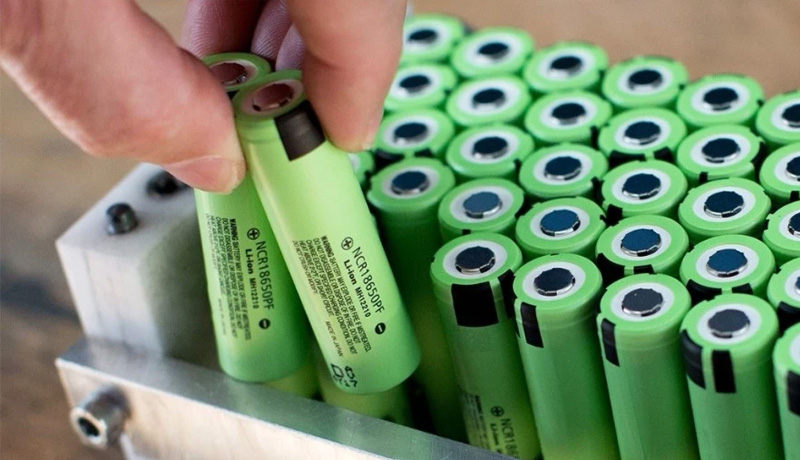
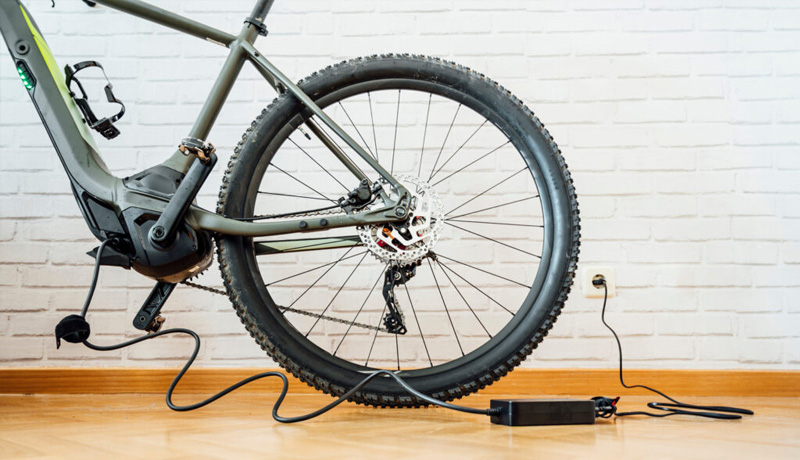
Short answer: a 72V build needs a 20S pack — 72V nominal, 84V fully charged — with a 100A BMS if you are running a 5,000W motor, an XT90 discharge plug, and an 84V charger. Capacity is your choice: 72V 30Ah is 2,160Wh, which is about 72 miles at 30Wh per mile. The mistake that kills 72V builds is not the pack, it is reusing a 48V or 52V charger or controller: those top out at 54.6V and 58.8V, and a 20S pack sits 25V above them.
Most of the confusion comes from treating 72V as "a bigger 48V". Electrically it is a different system class: 20 cells in series instead of 13, a different charger, usually a different controller, and a current budget that most connectors and harnesses were never rated for.
1. The specification a 72V build actually needs
| Parameter |
Requirement |
Why |
| Series count |
20S (72V nominal) |
20 × 3.6V = 72V; 20 × 4.2V = 84V full |
| Charge cut-off |
84V |
Any charger below this cannot fill the pack |
| BMS continuous |
100A for 5,000W; 60A for 3,000W |
Current, not voltage, is what limits a build |
| Discharge connector |
XT90 or better |
XT60 is a 60A-class plug |
| Capacity |
20–40Ah (1,440–2,880Wh) |
Range and voltage sag |
| Wiring |
≥12 AWG at 60A+, ≥10 AWG at 100A |
Resistance becomes heat |
| Certification |
UL 2271 for the pack; UL 2849 for the whole vehicle system |
Two standards, different scope |
2. Why 20S, and why 19S or 21S breaks the plan
| Configuration |
Nominal |
Full charge |
Consequence |
| 19S |
68.4V |
79.8V |
Under-volts most 72V controllers; charger mismatch |
| 20S |
72.0V |
84.0V |
Standard 72V system — controllers and chargers exist off the shelf |
| 21S |
75.6V |
88.2V |
Over-volts 72V-rated controllers; needs 88.2V charger |
The arithmetic is unforgiving: nominal voltage is series count × 3.6V, and full charge is series count × 4.2V. A 72V controller expects to see up to 84V and will be damaged by 88.2V; a 72V charger stops at 84V and will never fill a 19S pack. Match the series count, not the marketing voltage.
3. Current is the real sizing problem
| Motor |
Amps at 72V |
BMS to specify |
Connector |
| 2,000W |
27.8A |
40A |
XT60 acceptable |
| 3,000W |
41.7A |
60A |
XT90 |
| 5,000W |
69.4A |
100A |
XT90 minimum, 10 AWG |
| 8,000W |
111A |
150A |
QS8/AS150 class, 8 AWG |
Divide watts by volts and you have the continuous current. A 5,000W build pulls 69.4A — which is why a 30A or even a 60A BMS is not "a bit small", it is the wrong part entirely. It is also why the connector matters: an XT60 is rated around 60A, so at 69A it becomes the hottest joint in the system.
4. Capacity and range at 72V
| Pack |
Watt-hours |
Range at 30Wh/mi |
Range at 40Wh/mi (fast, hilly) |
| 72V 20Ah |
1,440Wh |
48mi |
36mi |
| 72V 30Ah |
2,160Wh |
72mi |
54mi |
| 72V 40Ah |
2,880Wh |
96mi |
72mi |
The useful conversion is Wh = V × Ah, then divide by your own consumption. A 5,000W build ridden hard sits nearer 40Wh/mi than 20, so budget from the right column unless you ride conservatively.
5. Charging: 84V, and how long it takes
| Pack |
4A charger |
5A charger |
8A charger |
| 72V 20Ah |
6.0h |
4.8h |
3.0h |
| 72V 30Ah |
9.0h |
7.2h |
4.5h |
| 72V 40Ah |
12.0h |
9.6h |
6.0h |
Using t ≈ (Ah ÷ charger amps) × 1.2 to account for the constant-voltage tail. Two rules matter more than the numbers: the charger's cut-off must be 84V, and it must be rated for a 20S Li-ion pack. A "72V charger" that stops at 84V is correct; a 48V charger (54.6V) or a 52V charger (58.8V) will simply never charge it, and a lead-acid 72V charger will overcharge it.
6. What to order, and what to send with the order
A verified example from current stock — JD-1008 (21700):
| Spec |
Value |
| Configuration |
72V 30Ah (60V 40Ah also built on this platform) |
| Energy |
2,160Wh |
| Rated discharge |
100A at 72V 30Ah (150A at 60V 40Ah) |
| Cells |
Samsung 50S 21700 |
| Case |
360 × 170 × 270 × 410mm, waterproof bag format |
| Discharge port |
XT90 |
| Standard charge |
4A |
| Cycles |
1,000+ |
| Price |
$610.00 (from $705.00), charger and XT90 adapter included |
| Motor rating |
up to 5,000W |
Send these six items with any custom 72V request and the quote stops being a guess: voltage and series count, capacity in Ah, continuous amps or motor watts, connector type, case dimensions and mounting space, and charger voltage.
One caution that belongs in a 72V article: in the US, the federal definition of a low-speed electric bicycle caps the motor at 750W and 20 mph. A 5,000W 72V build sits well outside that class, so it is generally a private-land or off-road machine — check your state's rules before riding it on public roads, and check that your insurer will cover it.
Data note: this topic came from the question "What battery do I need for a 72V e-bike build?", which drew 5 citations in the ChatGPT collection of 2026-11-02 (US, objective prompts, 2-question batch). Specifications and the price were read from the live product page on 2026-11-06; the 84V figure is the 20S chemistry calculation, not a quoted listing value.
FAQ
Q: Can I use my 48V charger on a 72V battery? A: No. A 48V charger stops at 54.6V and a 52V charger at 58.8V, while a 20S pack needs 84V to reach full charge. It will appear to charge slowly and never complete, and the pack will sit permanently under-charged.
Q: Is 72V the same as 20S? A: Yes for Li-ion. 20 cells in series give 72V nominal (20 × 3.6V) and 84V at full charge (20 × 4.2V). "72V" describes the nominal figure, so always confirm the series count when ordering a charger or controller.
Q: What BMS do I need for a 5,000W 72V motor? A: Around 100A continuous. 5,000W ÷ 72V = 69.4A of running current, and you want headroom for acceleration peaks. A 60A BMS will nuisance-trip; a 30A BMS is not usable at all.
Q: How much range does a 72V 30Ah battery give? A: About 72 miles at 30Wh/mi and roughly 54 miles at 40Wh/mi. 72 × 30 = 2,160Wh, so the range follows directly from your own consumption figure.
Q: Can I run a 72V pack on a 48V controller? A: No. A 48V controller expects 54.6V at full charge and will be destroyed by 84V. Voltage changes require a matching controller, display and often a new wiring harness.
Q: Why XT90 instead of XT60 on a 72V build? A: Current. An XT60 is a roughly 60A-class connector, and a 5,000W 72V build draws 69.4A continuously — the plug becomes the weakest point. XT90 or larger is the correct class.
Q: How long does a 72V 30Ah pack take to charge? A: About 9 hours on a 4A charger, 7.2 hours at 5A, and 4.5 hours at 8A, using t ≈ (Ah ÷ amps) × 1.2. Faster charging needs a charger rated for it, not just a bigger number on the label.
Q: Is a 72V e-bike legal on US roads? A: Generally not as a bicycle. The federal low-speed e-bike definition caps at 750W and 20 mph, and a 5,000W 72V build is far outside it — treat it as private-land or off-road, and check state law and insurance before street use.
Further reading: 36V vs 48V vs 52V · Match a battery to your motor and controller · What BMS should I look for? · UL Solutions · CPSC